
AI video for businesses refers to the use of artificial intelligence tools to create, edit, and distribute video content for commercial purposes. This includes generative AI platforms like Google Veo 3.1 or Kling AI that produce video from text or images, AI avatar tools like HeyGen that create presenter-led videos from scripts, and AI-powered editing platforms that automate post-production workflows.
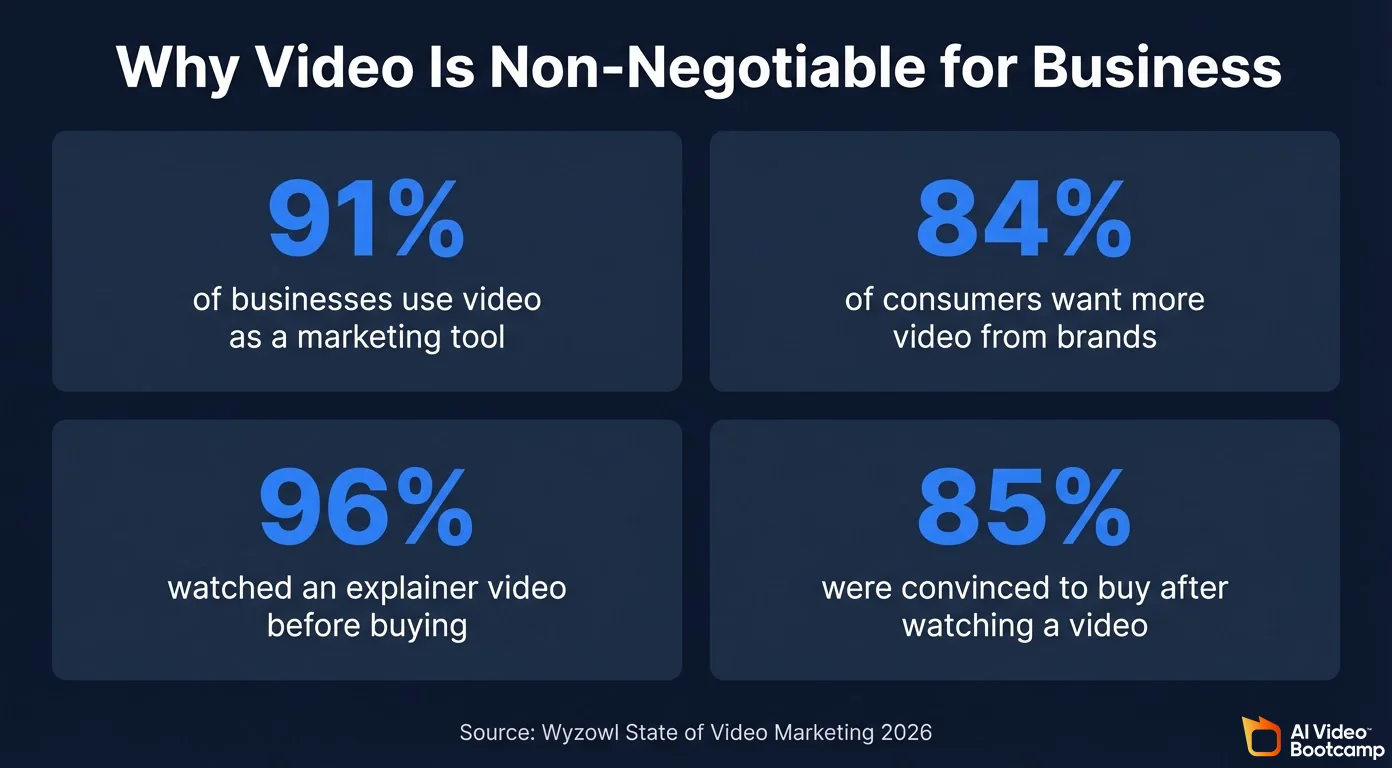
Video is no longer a nice-to-have marketing channel. According to Wyzowl’s 2026 State of Video Marketing survey, 91% of businesses now use video as a marketing tool, and 93% of video marketers consider it an important part of their overall strategy. Meanwhile, 84% of consumers say they want to see more videos from brands. The demand is clear. What has changed in 2026 is how that video gets made.
AI has fundamentally altered the economics and speed of video production. Tasks that once required production crews, studio time, and weeks of editing can now be completed in minutes using AI tools. The global AI video generator market was valued at $716.8 million in 2025 and is projected to reach $3.35 billion by 2034, growing at a compound annual growth rate of 18.8%, according to Fortune Business Insights.
The U.S. Census Bureau’s analysis of technology impact on businesses confirms that AI adoption is accelerating across all sectors of the economy, with creative and marketing functions among the fastest-growing areas. The Bureau of Labor Statistics has incorporated AI impacts into its employment projections, recognising that AI tools are reshaping how businesses create and distribute content.
This guide covers everything a business needs to know about AI video in 2026: the tools available, the use cases driving adoption, implementation strategies, cost considerations, and the skills required to execute effectively.
Why AI Video Matters for Businesses in 2026
The Video Demand Gap
There is a growing gap between the amount of video content businesses need and what they can realistically produce using traditional methods. Wyzowl’s data shows that 82% of video marketers report video has helped increase web traffic, 85% say it has helped generate leads, and 83% say video has directly increased sales. The evidence that video works is overwhelming.
Yet producing video traditionally remains expensive and slow. The two biggest barriers to video marketing adoption are cost (24% of non-video-using marketers cite this) and not knowing where to start (also 24%). AI video tools address all three of these barriers simultaneously: they reduce costs dramatically, simplify the creation process, and compress production timelines from weeks to hours.
The Economics Have Shifted
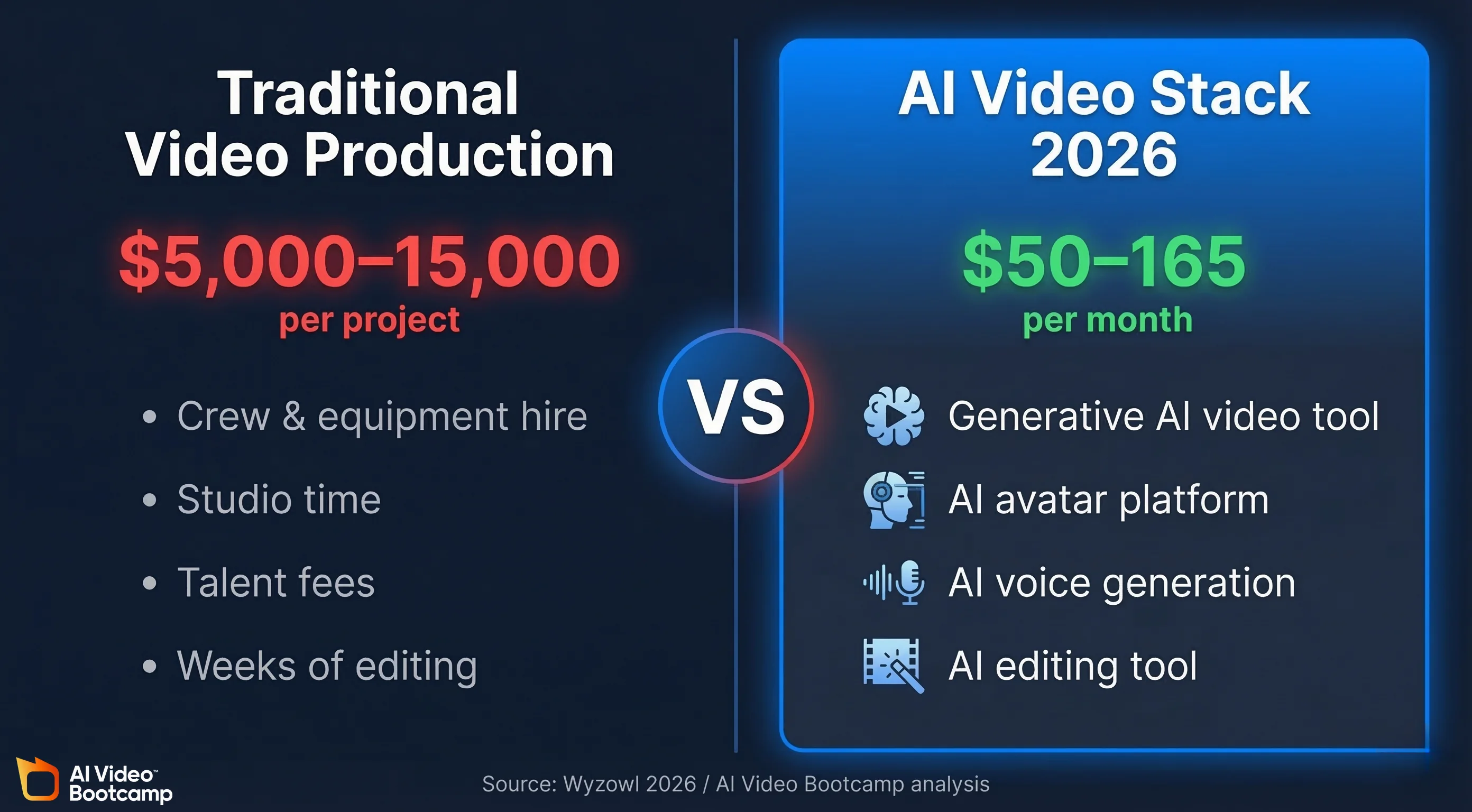
The cost equation for video production has changed fundamentally. Traditional professional video production typically costs thousands per finished minute when accounting for scripting, filming, talent, editing, and post-production. AI video tools have collapsed this cost structure.
According to Wyzowl, 30% of marketers say the costs associated with video marketing are getting cheaper, and 92% plan to spend the same or more on video marketing in 2026. The direction is clear: budgets are holding steady or growing, but the output per pound spent is increasing dramatically thanks to AI.
Consumer Expectations Are Rising
Consumers are not just watching more video. They are using it to make purchasing decisions. 96% of people have watched an explainer video to learn more about a product or service, 85% have been convinced to buy after watching a video, and 89% say video quality impacts their trust in a brand. When 63% of consumers say they would most like to learn about a product or service by watching a short video, businesses that cannot produce video content efficiently are at a competitive disadvantage.
Types of AI Video Tools for Business
Generative AI Video Platforms
These tools create video content from text prompts, images, or short reference clips. The leading platforms include Kling AI for cost-effective video generation with strong motion quality, Pika for stylised and creative video outputs, and Google’s Veo for text-to-video generation within the Google ecosystem (Veo 3.1 excels at lip-sync).
Generative video tools are particularly valuable for advertising and social media teams that need to produce high volumes of visual content. They allow businesses to create product demonstrations, lifestyle scenes, and branded visual content without traditional filming.
AI Avatar and Presenter Video Tools
These platforms create realistic talking-head videos from written scripts, using AI-generated presenters or digital twins of real people. The two dominant platforms are Synthesia and HeyGen.
Synthesia, founded in 2017, is widely considered the enterprise leader. It is trusted by over 60,000 companies, offers 240+ AI avatars, supports 140+ languages, and emphasises enterprise-grade security features including SOC 2 Type II and GDPR compliance. Synthesia is particularly strong for corporate training, onboarding, and internal communications.
HeyGen, launched in 2020, is known for its realistic avatars, voice cloning capabilities, and real-time translation features supporting 175+ languages. It offers unlimited video generation on paid plans and is popular with marketers, small businesses, and content creators.
AI Voice and Audio Tools
Voice generation and cloning tools like ElevenLabs create natural-sounding narration from text. These are used for voiceovers, podcast content, audio guides, and adding narration to visual content. ElevenLabs has become an industry standard for AI voice generation, offering voice cloning, multilingual support, and a range of voice styles suitable for commercial applications.
AI-Powered Video Editing Tools
These tools enhance traditional video editing workflows with AI capabilities including automatic captioning, background removal, noise reduction, colour grading, and content repurposing. Tools like CapCut and Premiere Pro have integrated AI features that automate previously manual editing tasks.
Business Use Cases for AI Video
Marketing and Advertising
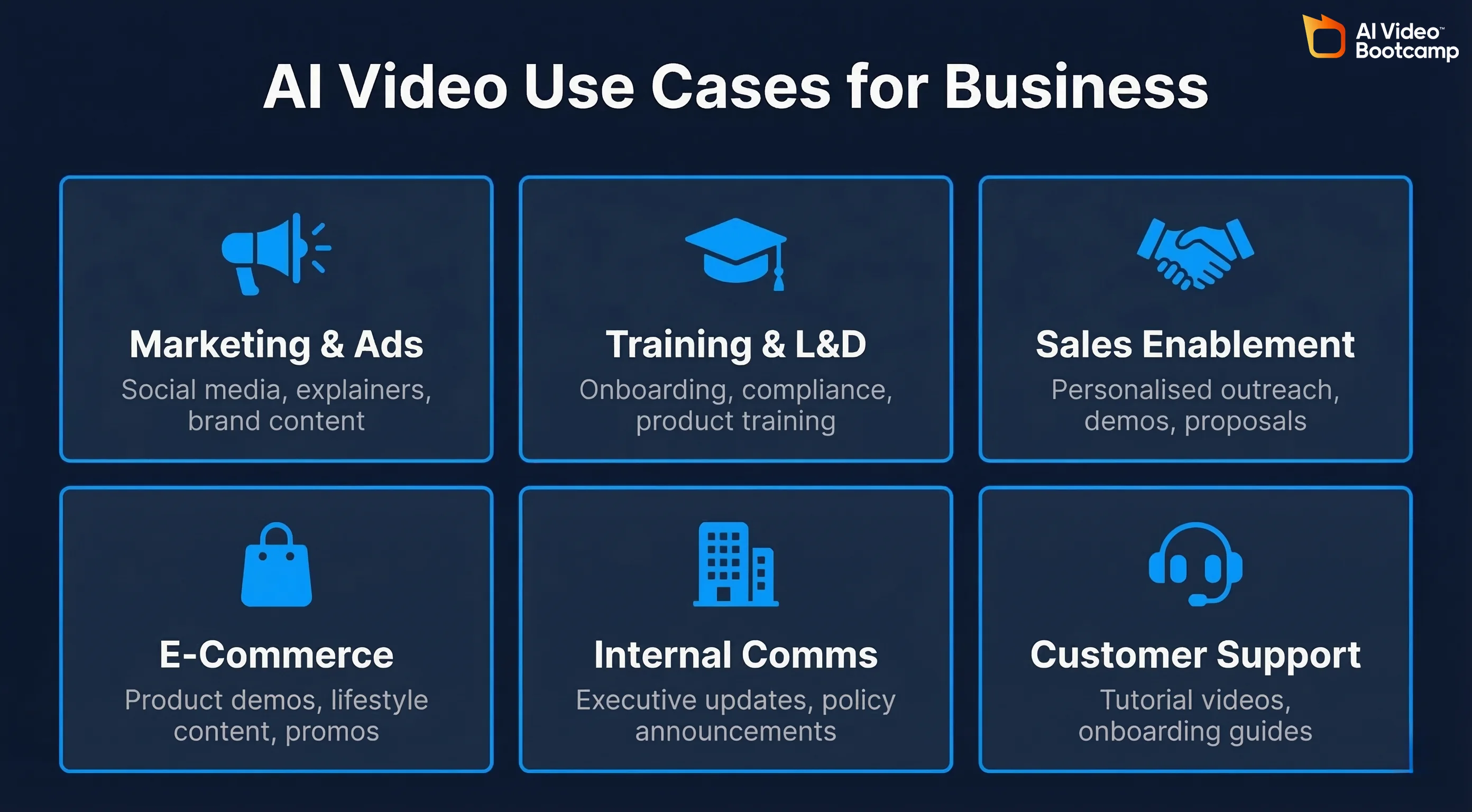
This is the largest application area. 71% of video marketers create social media videos and 70% create explainer videos. AI tools allow marketing teams to produce more variations of creative content, test different approaches quickly, and maintain a consistent publishing cadence that would be impossible with traditional production methods. For a deep dive on AI video ads specifically, see our complete guide to AI video ads.
Training and Learning & Development
Corporate training is one of the highest-ROI applications for AI video. AI avatar platforms allow L&D teams to produce training content by typing a script, choosing an avatar, and generating a professional video in minutes. When policies change or products are updated, the video can be regenerated with edited text rather than re-filmed. This is particularly valuable for organisations with distributed or multilingual workforces.
Sales Enablement
Sales teams are using AI video for personalised prospect outreach, product demonstrations, proposal walkthroughs, and follow-up communications. HeyGen’s digital twin feature allows sales professionals to create a video version of themselves that can deliver personalised messages at scale. LinkedIn users are 20 times more likely to share a video than any other type of post, making AI-generated video a powerful tool for social selling.
E-Commerce and Product Content
E-commerce businesses face constant demand for product imagery and video. AI tools allow brands to generate product demonstrations, lifestyle content, and promotional videos without traditional photoshoot logistics. According to Loopex Digital, 80% of consumers report that watching product videos boosts their confidence in purchasing.
Internal Communications
Company updates, executive announcements, policy changes, and organisational communications are increasingly delivered via video. AI avatar tools make it possible for leadership teams to communicate through video without the scheduling and production overhead of traditional filming.
Customer Support and Onboarding
AI-generated tutorial and support videos can address common customer questions, guide users through product features, and reduce the load on support teams. 93% of video marketers say video has helped increase user understanding of their product or service.
How to Implement AI Video in Your Business
Step 1: Audit Your Current Video Needs
Before selecting tools, map your existing video requirements across all departments. Marketing may need social media content. L&D may need training videos. Sales may need outreach content. Understanding the full scope helps you choose platforms that serve multiple use cases.
Step 2: Match Tools to Use Cases
| Use Case | Recommended Tool Type | Example Platforms |
|---|---|---|
| Social media ads and creative content | Generative AI video | Runway, Kling AI, Pika |
| Training and L&D videos | AI avatar platforms | Synthesia, HeyGen |
| Sales outreach and personalisation | AI avatar with voice cloning | HeyGen, Synthesia |
| Product demonstrations | Generative AI + editing | Kling AI, CapCut |
| Voiceovers and narration | AI voice generation | ElevenLabs |
| Content repurposing | AI editing platforms | Descript, CapCut |
| UGC-style ads and brand content | Generative AI + AI avatars | Google Veo 3.1, Kling AI, HeyGen |
Step 3: Start With a Pilot Project
Rather than committing to enterprise-wide adoption immediately, select one high-impact use case for a pilot. Training video production is often a strong starting point because the ROI is easy to measure. Social media advertising is another strong pilot because results can be measured through engagement metrics within weeks.
Step 4: Develop Internal Skills
AI video tools are accessible, but producing quality output still requires skill in prompting, scripting, visual direction, and quality control. Invest in training for the team members who will use these tools daily. The National Science Foundation’s AI workforce development initiatives recognise that AI literacy is becoming a core professional competency across industries.
For teams focused on generative AI video and image creation, AI Video Bootcamp provides structured training on the specific tools and workflows businesses need, covering prompting techniques, character consistency, AI avatar creation, and commercial content production.
Step 5: Establish Quality Control Processes
AI video output requires human review before publishing. Establish a workflow that includes script review before generation, visual quality checks for AI artefacts, brand compliance review, legal review for claims made in video content, and accessibility checks including captions. Wyzowl’s data shows that 89% of consumers say video quality impacts their trust in a brand. Poorly produced AI video can damage brand perception rather than enhance it.
Step 6: Measure and Iterate
Track performance against your existing benchmarks: production cost per video, time from concept to published video, engagement rates, conversion metrics, support ticket reduction, and training completion rates.
What AI Video Costs in 2026
Generative AI Video Tools
Runway offers plans from a free tier through Standard ($12/month) and Pro plans. Kling AI offers competitive pricing with generous free tiers. For most small to mid-sized businesses, monthly spend on generative AI video tools typically ranges from $50 to $165.
AI Avatar Platforms
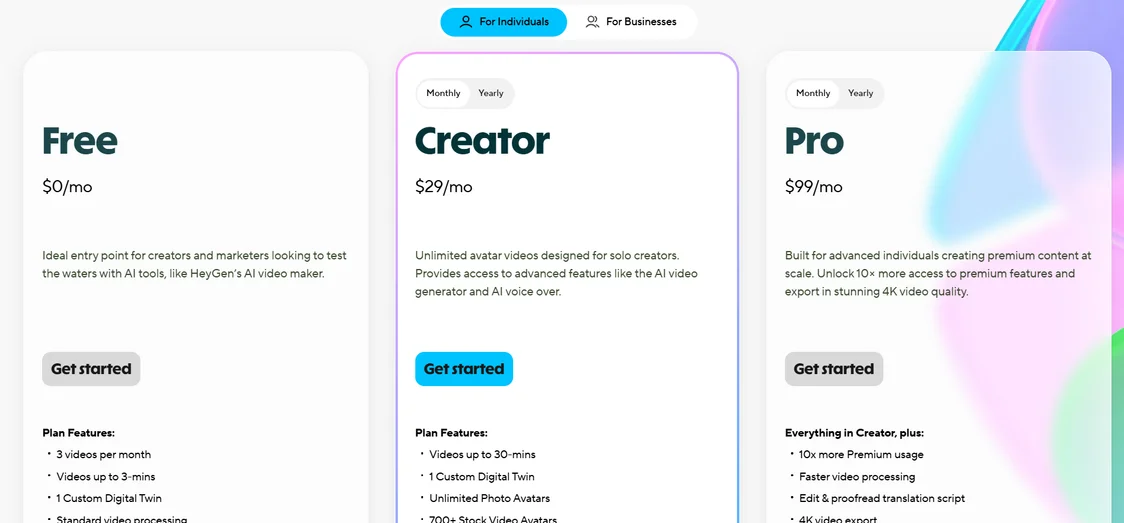
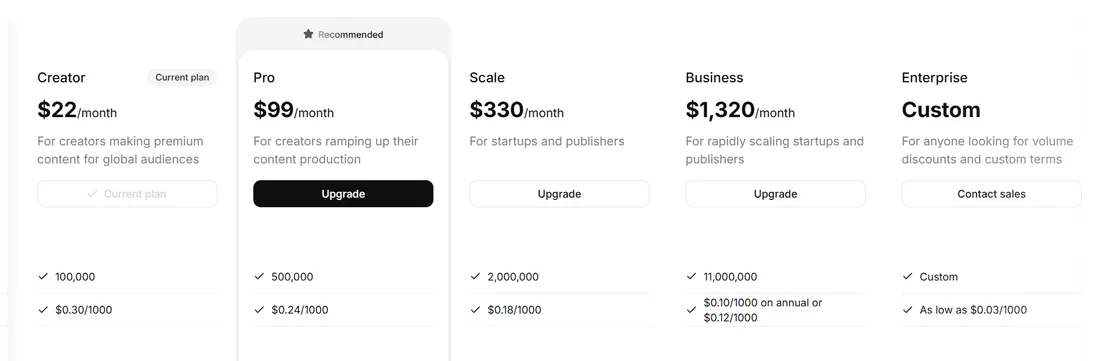
HeyGen starts with a free tier, a Creator plan at $24 per month, and a Pro plan at $99 per month. Enterprise plans are available with custom pricing.
Total Cost Scenario
A typical small business AI video stack: generative AI video tool ($20–50/month), AI avatar platform ($24–99/month), voice generation tool ($5–22/month), and editing platform ($0–24/month). Total monthly spend ranges from approximately $50 to $165, which is dramatically less than the cost of a single traditionally produced marketing video.
AI Video Adoption by Industry
Real Estate
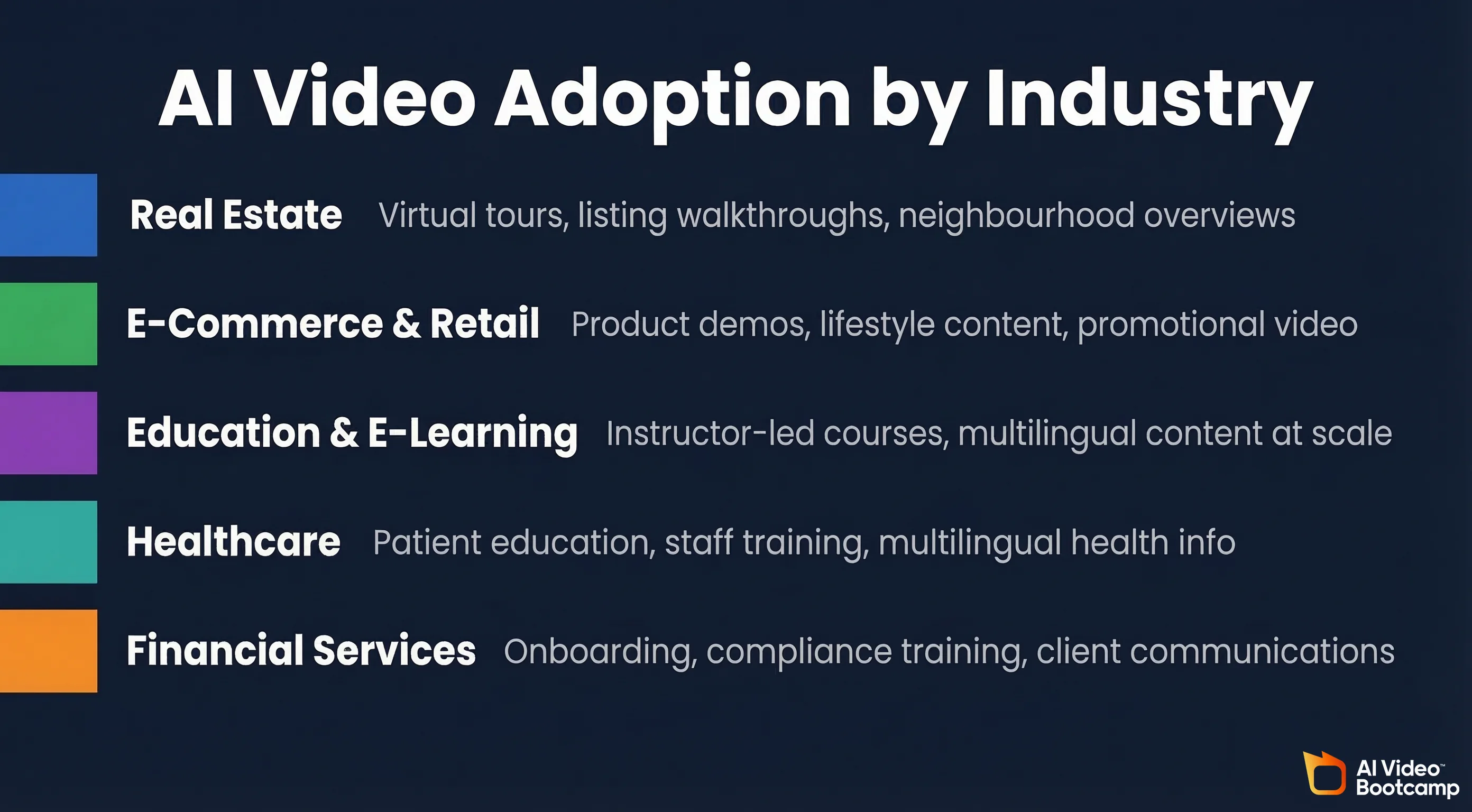
Property agencies and developers are using AI video for virtual property tours, neighbourhood overviews, and listing presentations. AI-generated video walkthroughs allow agents to create professional-quality property content without hiring videographers for every listing.
E-Commerce and Retail
Online retailers use AI video to generate product demonstrations, lifestyle context videos, and promotional content at a fraction of the traditional cost. Fashion, beauty, and consumer electronics brands are among the earliest adopters.
Education and E-Learning
Educational institutions and e-learning platforms use AI avatar tools to produce instructor-led content at scale. A single course can be produced in multiple languages without hiring separate presenters for each.
Healthcare and Pharmaceuticals
Healthcare organisations use AI video for patient education, staff training, and compliance content. The ability to produce multilingual health information quickly is particularly valuable for healthcare systems serving diverse populations.
Financial Services
Banks, insurance companies, and fintech firms use AI video for customer onboarding, product explainers, compliance training, and client communications. Enterprise security features including SOC 2 compliance make AI avatar platforms suitable for regulated environments.

What Is Coming Next
Longer and Higher-Quality Generation
Generative AI video models are producing increasingly longer clips at higher resolutions. Extended shot durations of up to 15 seconds on Kling AI enable proper cinematic storytelling, a significant improvement from the 4-second clips that were standard just 18 months ago.
Interactive and Conversational Video
Synthesia’s Video Agents represent a shift from one-way video to interactive, conversational experiences. Instead of passively watching a training video, viewers can interact with an AI presenter that responds to questions in real time.
Deeper Personalisation
AI enables video personalisation at scale. Videos can be dynamically customised per viewer with personalised names, data, and recommendations. Multi-language AI video is already used by a significant number of global brands.
Short-Form Video Dominance
71% of marketers believe videos between 30 seconds and 2 minutes perform best. AI tools are particularly well-suited to short-form production because they can generate multiple variations quickly, enabling businesses to test different hooks and messages across platforms.
Frequently Asked Questions
How much does AI video production cost compared to traditional video?
A typical small business AI video tool stack costs between $50 and $165 per month. Traditional professional video production can cost thousands per finished minute. The exact savings depend on your production volume and content complexity.
Which AI video tools are best for businesses?
For generative video: Google Veo 3.1 and Kling AI lead the market. For AI avatar-based videos: Synthesia is the enterprise leader and HeyGen excels for marketing. For voice: ElevenLabs is the industry standard. For editing: CapCut offers strong AI-assisted workflows. Most businesses benefit from a combination of tools. See our complete AI video generator rankings for detailed comparisons.
Is AI-generated video good enough for professional use?
Yes, with caveats. AI avatar platforms like Synthesia and HeyGen produce videos used by Fortune 500 companies. Generative AI video from platforms like Kling AI is used commercially for advertising and social media content. However, all AI video output should be reviewed by humans before publication.
Can AI video be used for multilingual content?
Yes, and this is one of the strongest business cases. Synthesia supports 140+ languages with synchronised lip movements. HeyGen supports 175+ languages with real-time translation. A single video in English can be automatically translated and dubbed into dozens of languages.
Do I need technical skills to use AI video tools?
Most tools are designed for non-technical users. However, producing high-quality output consistently does require skill in prompt engineering, visual direction, scripting, and post-production. Structured training significantly accelerates the learning curve.
Key Takeaways
AI video has moved beyond experimentation into mainstream business adoption. With 91% of businesses already using video as a marketing tool and AI making production faster and more affordable than ever, the question for businesses in 2026 is not whether to adopt AI video, but how to implement it effectively.
The OECD’s analysis of AI adoption by SMEs confirms that businesses investing in AI capabilities now are establishing competitive advantages that compound over time. Success requires clear objectives, the right tools for your use cases, skilled people who know how to use them, and robust quality control processes.