Veo 3.1 Lite is Google’s new budget AI video model that generates 720p video with native audio at $0.05 per second, making it the cheapest entry point in Google’s Veo lineup and less than half the cost of Veo 3.1 Fast. Launched on March 31, 2026, it is available now through the Gemini API and Google AI Studio. The model trades 4K resolution and Extension upscaling for aggressive cost savings, targeting developers and creators who need high-volume video production without premium pricing. Community reaction has been skeptical: many creators expected Google to release Veo 4 to compete with Seedance 2.0 and Kling 3.0, not a stripped-down version of existing technology.
What Is Veo 3.1 Lite? Google’s Budget Video Model
Veo 3.1 Lite is a cost-optimized tier of Google’s Veo 3.1 video generation system. It produces AI-generated video with synchronized audio from text prompts or image inputs, at roughly one-third the price of the standard Veo 3.1 Fast model and one-eighth the price of Veo 3.1 Premium.
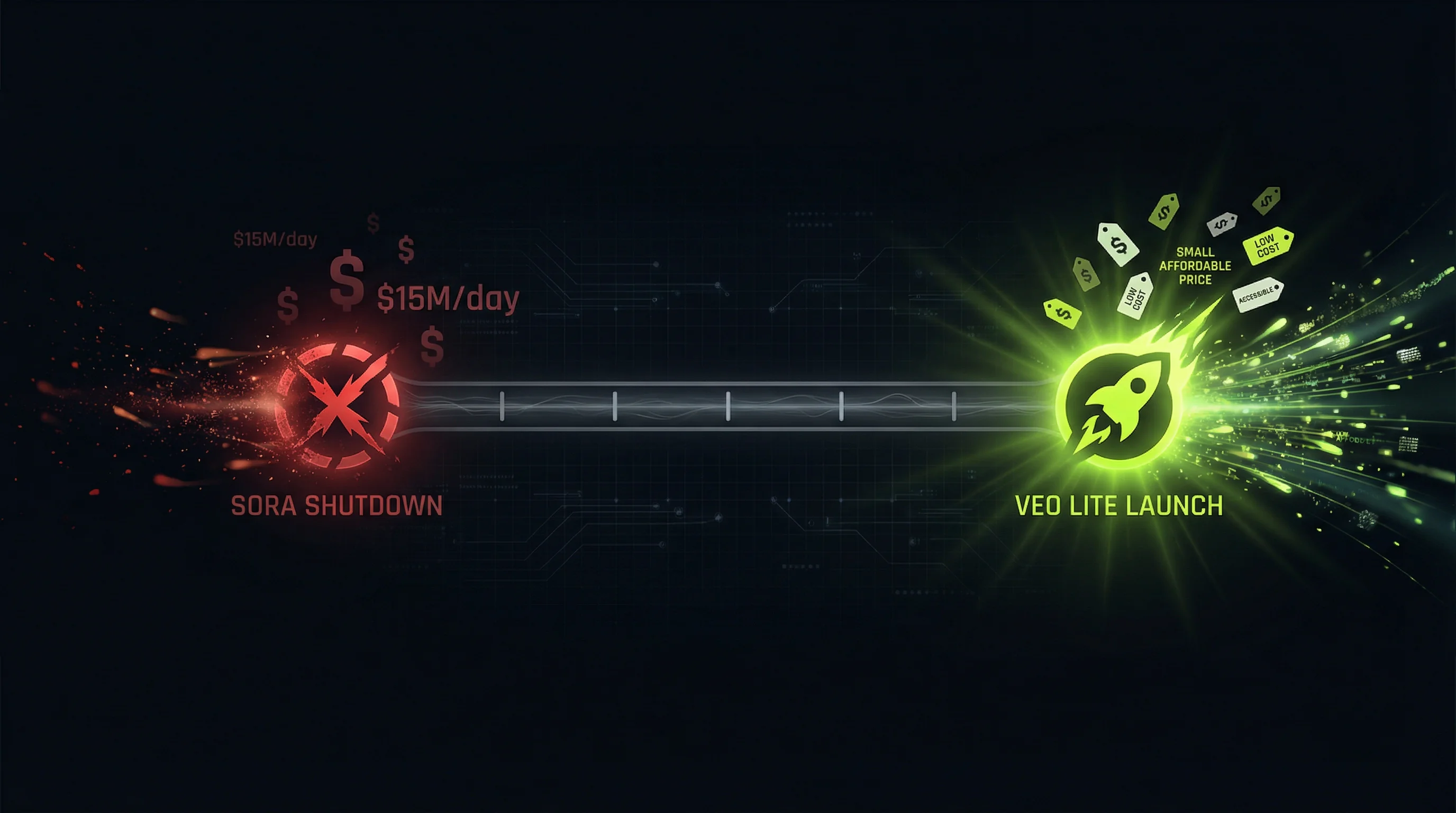
Google announced Veo 3.1 Lite on March 31, 2026. The timing is notable: it arrived six days after OpenAI shut down Sora on March 25, 2026, which reportedly cost OpenAI $15 million per day in compute while generating only $2.1 million in total lifetime revenue. Google is clearly positioning Veo as the primary AI video API for developers now that Sora is gone.
The Veo family now has three tiers:
- Veo 3.1 Premium at $0.40/sec: highest quality, 4K capable, Extension upscaling
- Veo 3.1 Fast at $0.15/sec: mid-tier quality, same feature set as Premium
- Veo 3.1 Lite at $0.05/sec (720p) or $0.08/sec (1080p): budget tier, no 4K, no Extension
All three tiers share the same core capability: native audio generation synchronized with video content. That includes ambient sounds, sound effects, dialogue, and music. This remains Veo’s strongest differentiator against competitors like Kling 3.0 and Seedance 2.0, neither of which generates audio natively.
“Veo 3.1 Lite brings the same generation speed as Veo 3.1 Fast at a fraction of the cost, making video generation accessible for high-volume applications.” Google for Developers, official announcement
Veo 3.1 Lite Technical Specs and Capabilities
Here is what Veo 3.1 Lite can and cannot do, based on the Gemini API documentation.
What Veo 3.1 Lite Does
- Text-to-video: Generate video from a text prompt (up to 1,024 tokens)
- Image-to-video: Generate video from a reference image plus text prompt
- Native audio: Synchronized soundtracks including ambient noise, sound effects, and dialogue
- Resolutions: 720p and 1080p
- Aspect ratios: 16:9 (landscape) and 9:16 (portrait)
- Duration options: 4 seconds, 6 seconds, or 8 seconds per clip
- Speed: Same inference latency as Veo 3.1 Fast
- Output: 1 video per API request
What Veo 3.1 Lite Does Not Do
- No 4K output (available only on Premium and Fast tiers)
- No Extension feature (the upscaling tool that enhances resolution post-generation)
- No video-to-video or editing capabilities
- No clips longer than 8 seconds per request
- No batch generation (1 output per request)
The model identifier for API calls is veo-3.1-lite-generate-preview, and it is accessed through the same Gemini API endpoint as other Google AI models.
Veo 3.1 Lite Pricing: Full Cost Breakdown
This is the complete pricing comparison across all Veo tiers, sourced from the Gemini API pricing page and Google’s official blog.
| Feature | Veo 3.1 Lite | Veo 3.1 Fast | Veo 3.1 Premium |
|---|---|---|---|
| Cost per second (720p) | $0.05 | $0.15 | $0.40 |
| Cost per second (1080p) | $0.08 | $0.15 | $0.40 |
| Cost for 8-second clip (720p) | $0.40 | $1.20 | $3.20 |
| Cost for 100 clips (720p, 8s each) | $40 | $120 | $320 |
| 4K Support | No | Yes | Yes |
| Extension (Upscaling) | No | Yes | Yes |
| Native Audio | Yes | Yes | Yes |
| Max Duration | 8s | 8s | 8s |
The developer community has taken notice of what the $0.05 price point means at scale. As @AIpromptslab noted in the Google Developers announcement thread on X:
“$0.05/sec for 720p is the tipping point for scaling video pipelines. This makes high-volume generation actually sustainable for startups looking to bake AI video into their core workflows.” @AIpromptslab, replying to Google for Developers
Google also announced that Veo 3.1 Fast pricing will drop by approximately 33% on April 7, 2026, according to 9to5Google. That would bring Fast down to roughly $0.10/sec, narrowing the gap between Fast and Lite.
Free Credits for New Users
New Google AI Studio accounts receive 10 free credits immediately. Personal Google accounts get 100 monthly AI credits (or 180 in certain regions) that work across all Google AI tools. Credits do not roll over between months.
Veo 3.1 Lite vs Veo 3.1 vs Grok Imagine: Head-to-Head Comparison
The most relevant comparison for creators is not Lite vs Premium (those serve different markets) but Lite vs the competition at similar price points. Grok Imagine from xAI is the closest competitor in the “cheap and fast” AI generation space, though it currently focuses on images rather than video.
| Feature | Veo 3.1 Lite | Veo 3.1 (Premium) | Grok Imagine |
|---|---|---|---|
| Type | Video + Audio | Video + Audio | Image generation |
| Max Resolution | 1080p | 4K | Up to 2K |
| Native Audio | Yes | Yes | N/A (images only) |
| Pricing | $0.05-$0.08/sec | $0.40/sec | Free with X Premium+ |
| Access | Gemini API, AI Studio | Gemini API, AI Studio | X (Twitter), grok.com |
| Video Length | 4-8 seconds | 4-8 seconds | N/A |
| Content Moderation | Strict (Google policies) | Strict (Google policies) | Minimal restrictions |
| Best For | Budget video batches | Final deliverables | Quick image concepts |
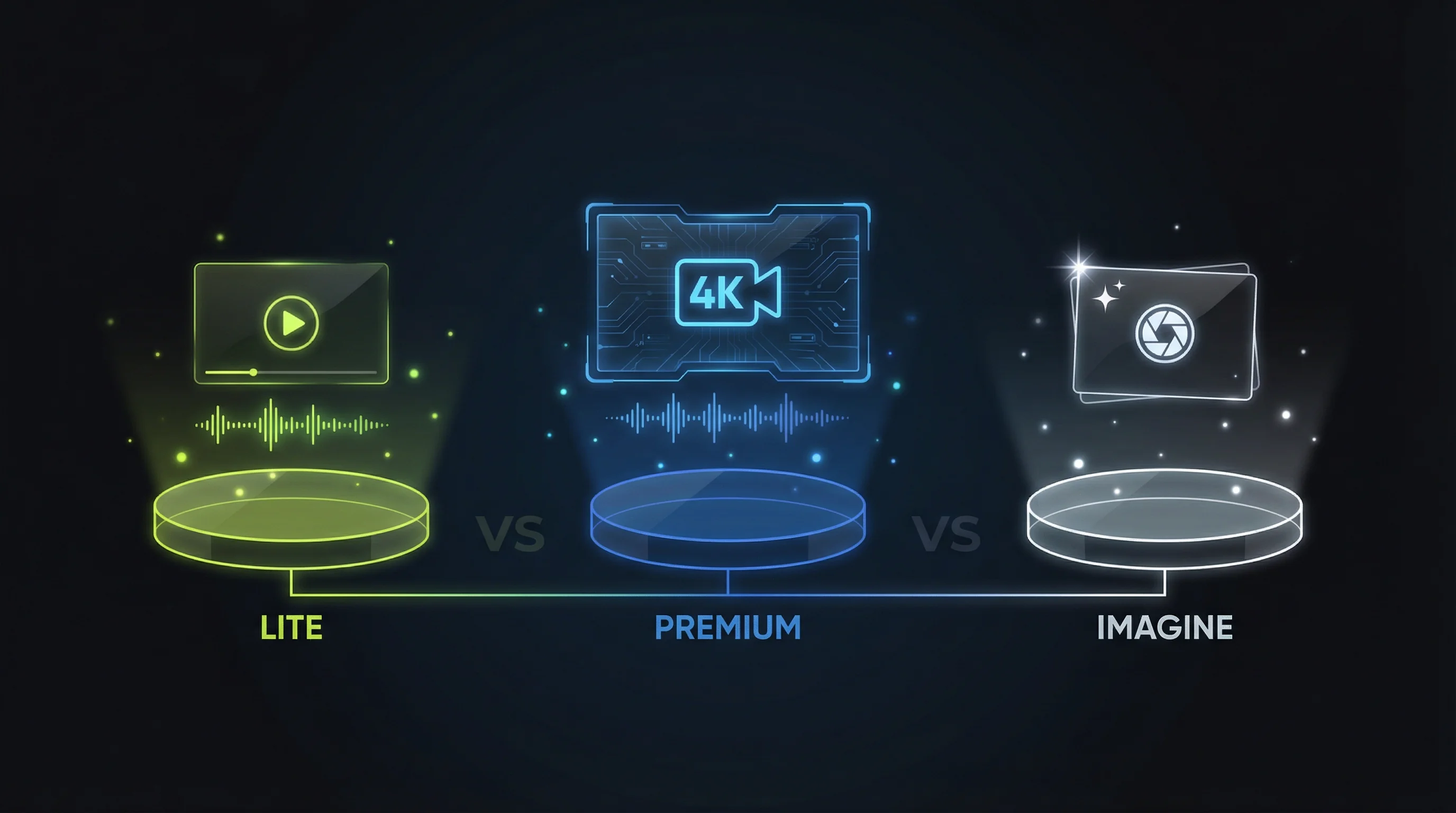
The AI Video Bootcamp community has noted a pattern: Google appears to be competing with Grok Imagine on the “cheap and accessible” front rather than pushing the quality frontier against Seedance 2.0 and Kling 3.0. More on that in the community reaction section below.
Community Reaction: Why Creators Wanted Veo 4 Instead

The launch of Veo 3.1 Lite has not been universally well received by the AI video creator community. Many creators on Reddit and X expected Google to respond to Seedance 2.0 and Kling 3.0 with a next-generation model, not a cheaper version of the current one.
One highly upvoted Reddit comment captured the sentiment:
“So instead of releasing Veo 4 when Seedance 2 and Kling 3 are already way better than their current model, they release a worse but cheaper version of Veo 3.1?”
This frustration reflects a real issue in the current AI video landscape. On the Artificial Analysis text-to-video leaderboard, Seedance 2.0 currently holds the top Elo rating at 1,214, while Kling 3.0 Omni sits at 1,099. Veo 3.1’s exact ranking varies by benchmark, but multiple independent comparisons from MagicHour and SeaVerse show it trailing Seedance 2.0 on motion quality and trailing Kling 3.0 on resolution.
The Grok Imagine Theory
Several AI Video Bootcamp community members have pointed out that Veo 3.1 Lite’s positioning looks more like a response to Grok Imagine than to Seedance or Kling. The argument: Google sees xAI’s free image generation gaining rapid adoption through X (formerly Twitter), and the strategic priority is to defend developer market share on the “affordable AI generation” front rather than win benchmark races on the “best quality” front.
This theory is supported by the timing. Google stock rose approximately 5% following the Veo Lite announcement, according to Seeking Alpha. Investors apparently see more value in cost leadership and developer adoption than in chasing quality benchmarks.
Whether this strategy pays off for creators is a different question. If you are producing final deliverables for clients, Veo 3.1 Lite’s quality tradeoffs matter. If you are a developer building an app that generates thousands of short clips, the 67% cost reduction over Veo 3.1 Fast is significant.
Best Use Cases for Veo 3.1 Lite

Based on the specs and pricing, Veo 3.1 Lite makes the most sense for these specific workflows:
1. High-Volume Social Media Content
At $0.40 per 8-second 720p clip, creators producing 10 or more videos per day save $8 to $24 daily compared to Fast and Premium tiers. For social media content where 720p is standard (Instagram Reels, TikTok, YouTube Shorts all compress heavily), the resolution tradeoff is minimal.
2. Rapid Prototyping and Concept Testing
When you need to test 20 prompt variations before committing to a final version, generating those tests at $0.05/sec instead of $0.40/sec cuts prototyping costs by 87.5%. Generate concepts with Lite, then re-generate the winner at Premium quality.
3. Product Demo Videos at Scale
E-commerce sellers generating product showcase videos for hundreds of SKUs benefit most from Lite’s pricing. A 6-second product video at 720p costs $0.30 with Lite versus $2.40 with Premium. At 500 products, that is $150 versus $1,200.
4. Background and Ambient Content
Lobby screens, event backgrounds, ambient content for streaming, and similar use cases where the video is not the primary focus. The native audio generation is particularly useful here: ambient soundscapes generated alongside the visuals eliminate a separate audio production step.
Where Veo 3.1 Lite Is Not the Right Choice
- Client deliverables: If you are delivering final video to paying clients, the quality gap between Lite and Premium is noticeable. Use Premium or Fast.
- 4K requirements: Any workflow requiring 4K output is excluded by design.
- Clips longer than 8 seconds: Lite has the same 8-second limit as all Veo tiers. For longer content, you will need to stitch multiple clips.
- Quality-critical comparisons: If your content competes visually with Seedance 2.0 or Kling 3.0 output, Lite will not match them. Even Veo 3.1 Premium trails on certain benchmarks.
How to Access Veo 3.1 Lite: Step-by-Step

Veo 3.1 Lite is available through two channels, both accessible immediately with no waitlist.
Option 1: Google AI Studio (Browser-Based)
- Go to Google AI Studio
- Sign in with your Google account
- Select the Veo 3.1 Lite model from the model picker
- Enter your text prompt (up to 1,024 tokens)
- Choose resolution (720p or 1080p), aspect ratio (16:9 or 9:16), and duration (4s, 6s, or 8s)
- Generate and download your video
New accounts receive 10 free credits. Personal Google accounts get 100 monthly credits (180 in some regions).
Option 2: Gemini API (Developer Integration)
For programmatic access, use the model identifier veo-3.1-lite-generate-preview through the Gemini API. This is the route for building applications, batch processing, or integrating AI video generation into existing workflows.
The API accepts text input (up to 1,024 tokens) and optional image input, returning one video per request. Pricing is pay-per-use based on resolution and duration.
What Veo 3.1 Lite Means for AI Video Creators in 2026
The release of Veo 3.1 Lite signals something important about where the AI video market is heading: the battle is shifting from “who has the best model” to “who has the most accessible model.” Google is not trying to win on quality with this release. It is trying to win on distribution and developer adoption.
This mirrors a pattern documented in Stanford’s 2024 AI Index Report: as AI models mature, competitive differentiation moves from raw capability to cost efficiency, integration ease, and ecosystem breadth. Google’s advantage here is the Gemini API ecosystem, YouTube integration, and existing developer relationships. For context on how Veo 3.1 Lite fits into the broader 2026 AI video landscape, see our trends analysis.
For individual creators, the practical impact depends on your volume. If you generate fewer than 10 videos per month, the pricing difference between Lite and Fast is under $10, and you should prioritize quality. If you generate hundreds of videos for a product catalog or social media pipeline, Lite’s cost structure changes the economics meaningfully.
For the broader competitive picture, including how Seedance 2.0, Kling 3.0, and Veo 3.1 compare on quality, see our Seedance vs Kling vs Veo head-to-head breakdown. For the full landscape of all 16 AI video generators ranked, see our definitive AI video generators ranking. And if you are looking for completely free options that cost nothing at all, check our honest guide to free AI video tools.
Frequently Asked Questions
How much does Veo 3.1 Lite cost per video?
Veo 3.1 Lite costs $0.05 per second for 720p and $0.08 per second for 1080p. A typical 8-second clip at 720p costs $0.40, and a 6-second clip at 1080p costs $0.48. This makes it less than half the price of Veo 3.1 Fast ($0.15/sec) and roughly one-eighth the price of Veo 3.1 Premium ($0.40/sec). For bulk production, 100 eight-second clips at 720p cost $40 with Lite versus $120 with Fast.
Is Veo 3.1 Lite better than Veo 3.1?
No. Lite is cheaper, not better. It trades resolution (no 4K) and features (no Extension upscaling) for a 67% cost reduction over Fast. The visual quality is noticeably lower than Premium on detailed scenes, complex motion, and close-up facial rendering. Use Lite for drafts, prototyping, and high-volume production. Use Premium or Fast for final deliverables and client work.
Can I use Veo 3.1 Lite for free?
Partially. New Google AI Studio accounts get 10 free credits, and personal Google accounts receive 100 monthly AI credits (180 in some regions). These credits work across all Google AI tools, not just Veo. After credits are used, it is pay-per-use. For truly free AI video generation, see our free AI video tools guide covering Google AI Studio’s free tier and open-source alternatives like daVinci-MagiHuman.
How does Veo 3.1 Lite compare to Kling 3.0 and Seedance 2.0?
Veo Lite’s native audio is the differentiator: neither Kling nor Seedance generates audio. But on visual quality, both competitors currently lead. Kling 3.0 offers native 4K at 60fps with 15-second multi-shot clips at $0.126/sec. Seedance 2.0 tops the Artificial Analysis leaderboard with an Elo of 1,214 and outputs native 2K resolution. If audio matters and budget is tight, Veo Lite wins. If visual quality is the priority, look at our Seedance vs Kling vs Veo comparison.
What happened to Sora and why does Veo 3.1 Lite matter now?
OpenAI shut down Sora on March 25, 2026 after it reportedly cost $15 million per day to operate while earning only $2.1 million in total lifetime revenue. With Sora gone, developers building AI video applications need an alternative API. Google’s Veo is the most direct replacement, and Veo 3.1 Lite gives those developers the cheapest entry point. The timing of the Lite launch, six days after Sora’s shutdown, is not a coincidence.
Sources and Citations
- Google, “Build with Veo 3.1 Lite”: blog.google/innovation-and-ai/technology/ai/veo-3-1-lite/
- Google Gemini API documentation, Veo 3.1 Lite: ai.google.dev/gemini-api/docs/models/veo-3.1-lite-generate-preview
- Google AI Studio: ai.google.dev/aistudio
- 9to5Google, “Google’s Veo 3.1 Lite”: 9to5google.com/2026/03/31/veo-3-1-lite/
- The Decoder, “Google’s Veo 3.1 Lite cuts video generation costs by more than half”: the-decoder.com
- Android Authority, “Google Veo 3.1 Lite”: androidauthority.com/google-veo-3-1-lite-3653697/
- Seeking Alpha, “Google unveils Veo 3.1 Lite”: seekingalpha.com/news/4570830
- Artificial Analysis, text-to-video leaderboard: artificialanalysis.ai/video/leaderboard/text-to-video
- Stanford University HAI, AI Index Report: hai.stanford.edu
- MagicHour, Kling 3.0 vs Veo 3.1 comparison: magichour.ai/blog/kling-30-vs-veo-31
- SeaVerse, Kling 3.0 vs Veo 3.1 comparison: seaverse.ai/features/kling-3-0-vs-veo-3-1-comparison
- AI Video Bootcamp community data, 16,500+ members, Q1 2026: aivideobootcamp.com
Published by AI Video Bootcamp, the community of 16,500+ creators learning to build AI video content. Join the community.