
Pricing verified April 30, 2026.
Generative AI is no longer a novelty - it’s a production engine. In just three years, AI tools have gone from producing crude, six-fingered images to generating photorealistic visuals, cinematic video, and studio-quality music. But how big is this market really, who’s winning, and where is it headed?
We compiled over 60 statistics from authoritative sources - including Gartner, PwC, Grand View Research, TechCrunch, Fortune Business Insights, Coursera, and company filings - to give you the most comprehensive, data-driven snapshot of the generative AI media landscape in 2026.
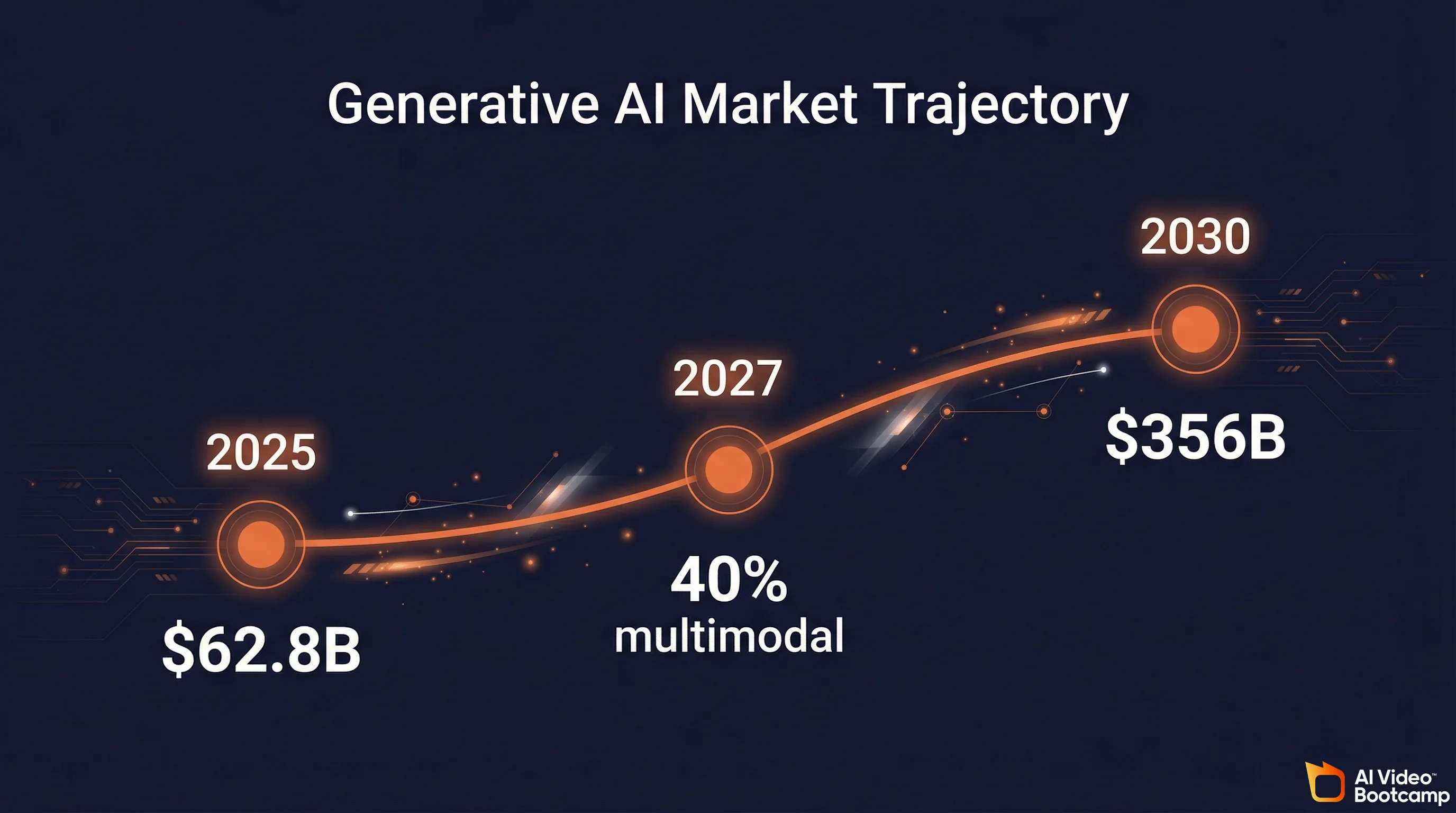
Table of Contents
- AI Image Generation Market
- AI Image Generation - Platform Data
- AI Video Generation Market
- AI Video Generation - Platform Data
- AI Music and Audio Generation Market
- AI Music and Audio - Platform Data
- Adoption, Usage, and Content Volume
- AI in Advertising and Marketing
- AI Skills, Jobs, and the Creator Economy
- Future Predictions and Forecasts
AI Image Generation Market
The AI image generation market is the most mature segment of generative media, with billions of images already created and market valuations climbing rapidly.
-
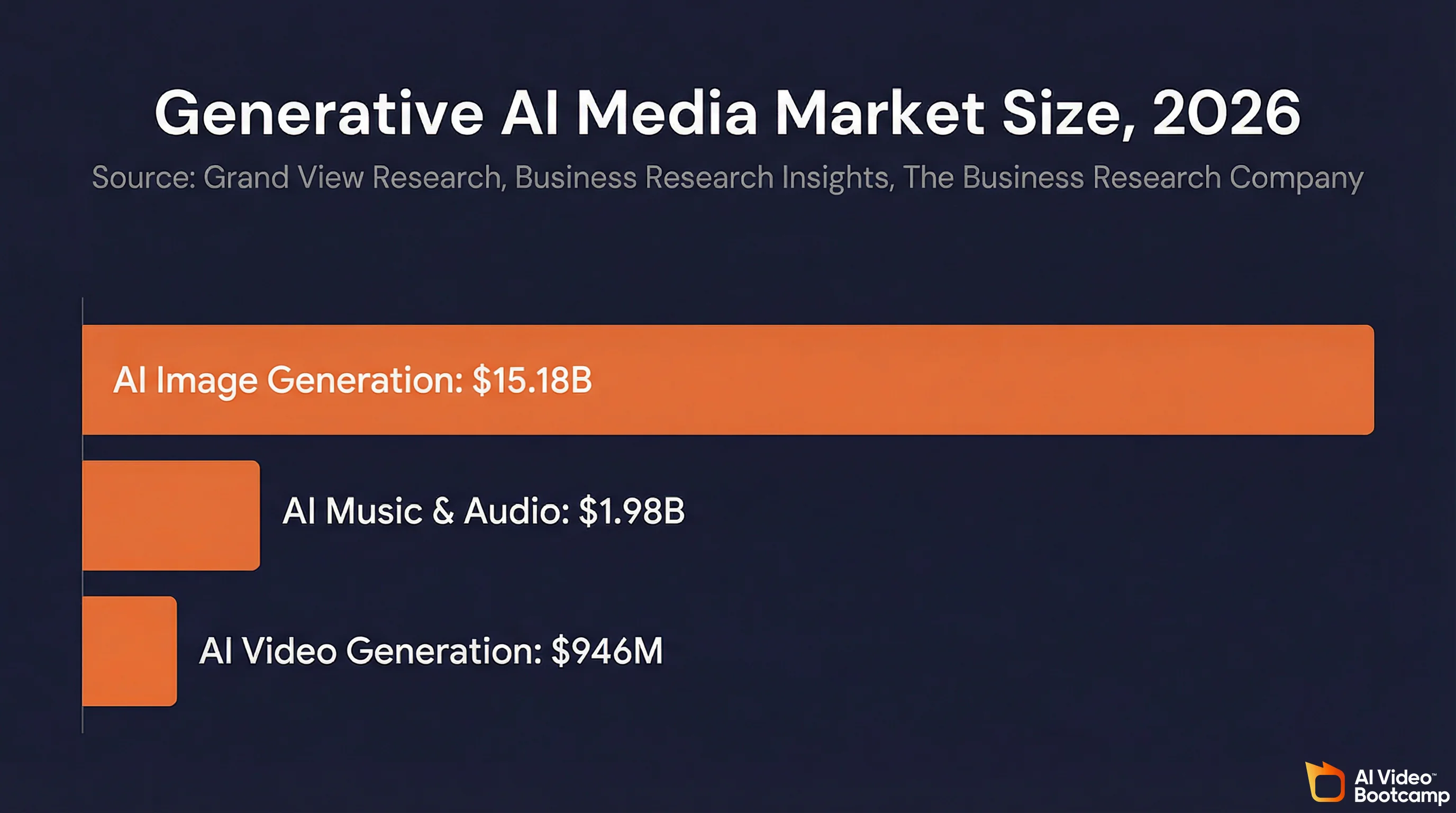
The global AI image generator market grew from $11.65 billion in 2025 to $15.18 billion in 2026, a 30.3% year-over-year increase that makes image generation the largest standalone segment in generative media. [1]
-
The AI-powered image generation tool market is expected to reach $272.8 billion by 2035, growing from $9.1 billion in 2025 at a CAGR of 40.5%. To put this in context, the entire global photography services market was valued at $44 billion in 2023 - AI image generation is on track to dwarf the industry it’s disrupting. [2]
-
The AI image generation sector is projected to reach $60.8 billion by 2030, representing a compound annual growth rate of 38.2% - making it one of the fastest-growing technology categories of the decade. [3]
-
North America dominated the AI image generator market with a 40.34% share in 2025, followed by Europe and Asia-Pacific. The concentration of major platforms (Midjourney, OpenAI, Adobe) in the U.S. is a key driver. [4]
-
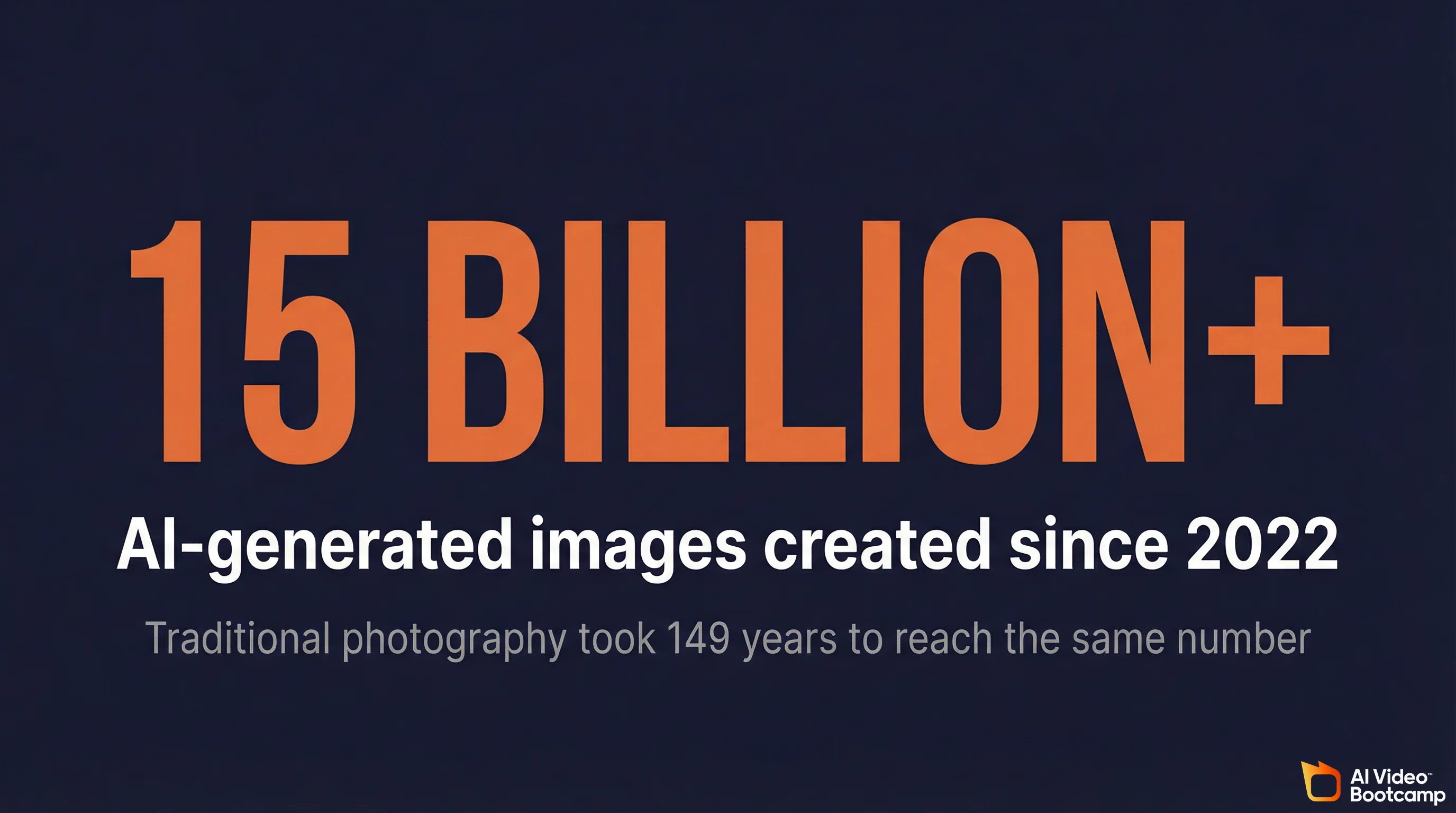
More than 15 billion AI-generated images have been created since 2022. For perspective, generative AI reached this milestone in roughly 1.5 years - traditional photography took nearly 149 years to produce the same number of images. [5]
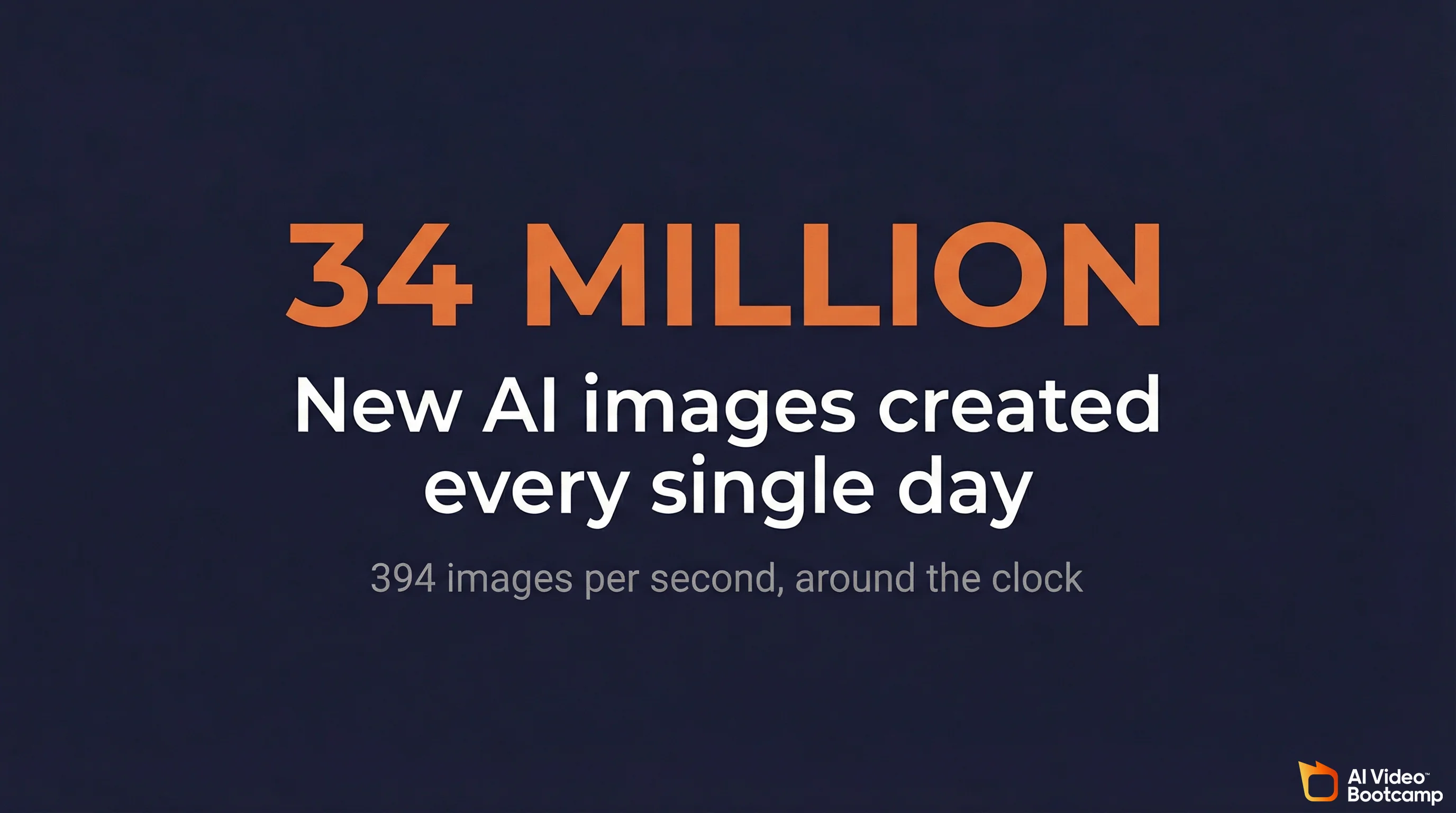
- Users create approximately 34 million new AI images every day across platforms like Midjourney, DALL·E, Stable Diffusion, and Adobe Firefly. That’s roughly 394 images per second, every second, around the clock. [5]
- About 80% of all AI images are generated using platforms based on Stable Diffusion, making Stability AI’s open-source architecture the dominant foundation in the space - even as proprietary platforms like Midjourney and DALL·E capture more revenue. [5]
AI Image Generation - Platform Data
Individual platforms reveal how concentrated - and competitive - this market has become. A handful of companies capture the majority of revenue and users, but their business models differ significantly.
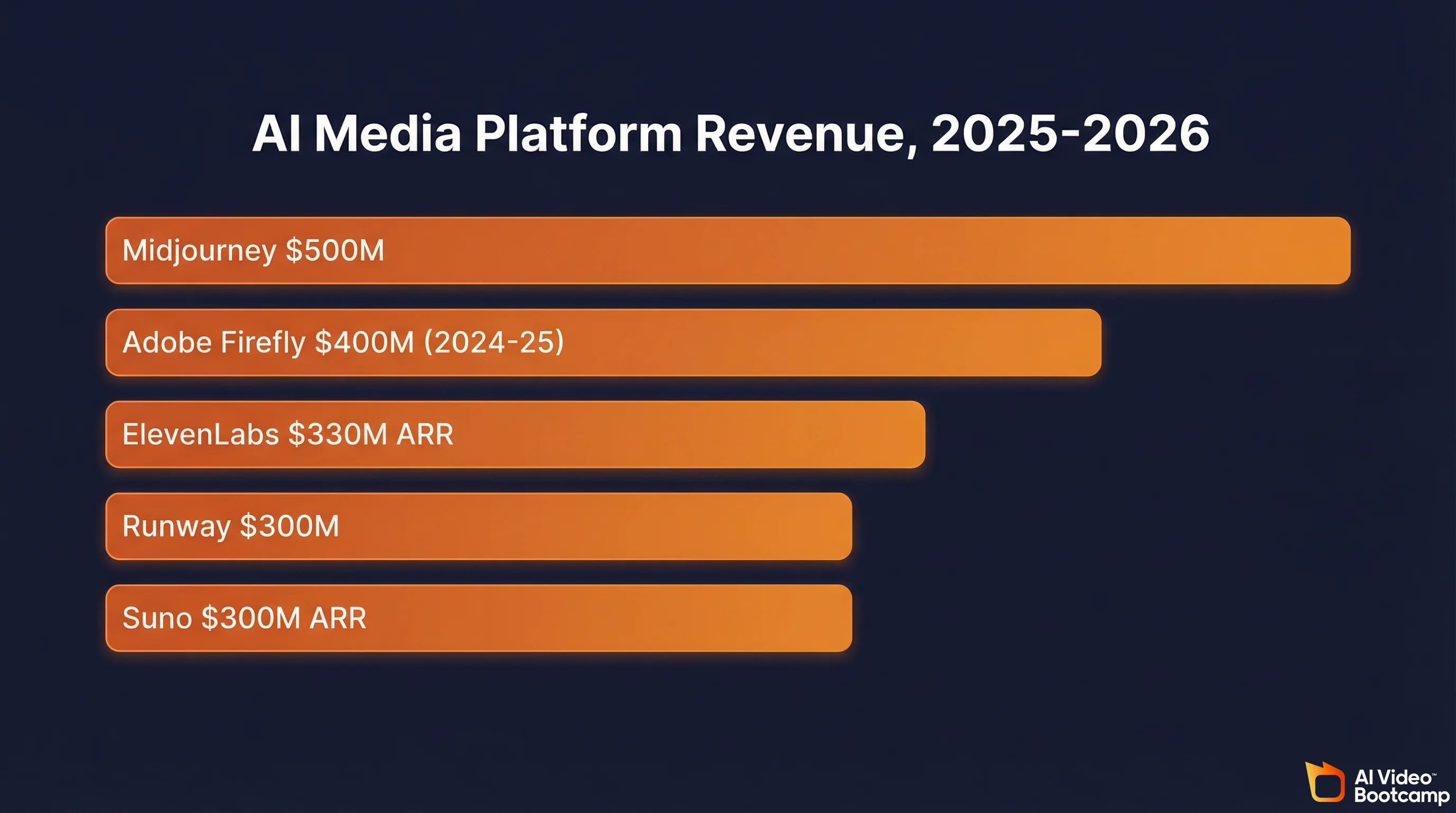
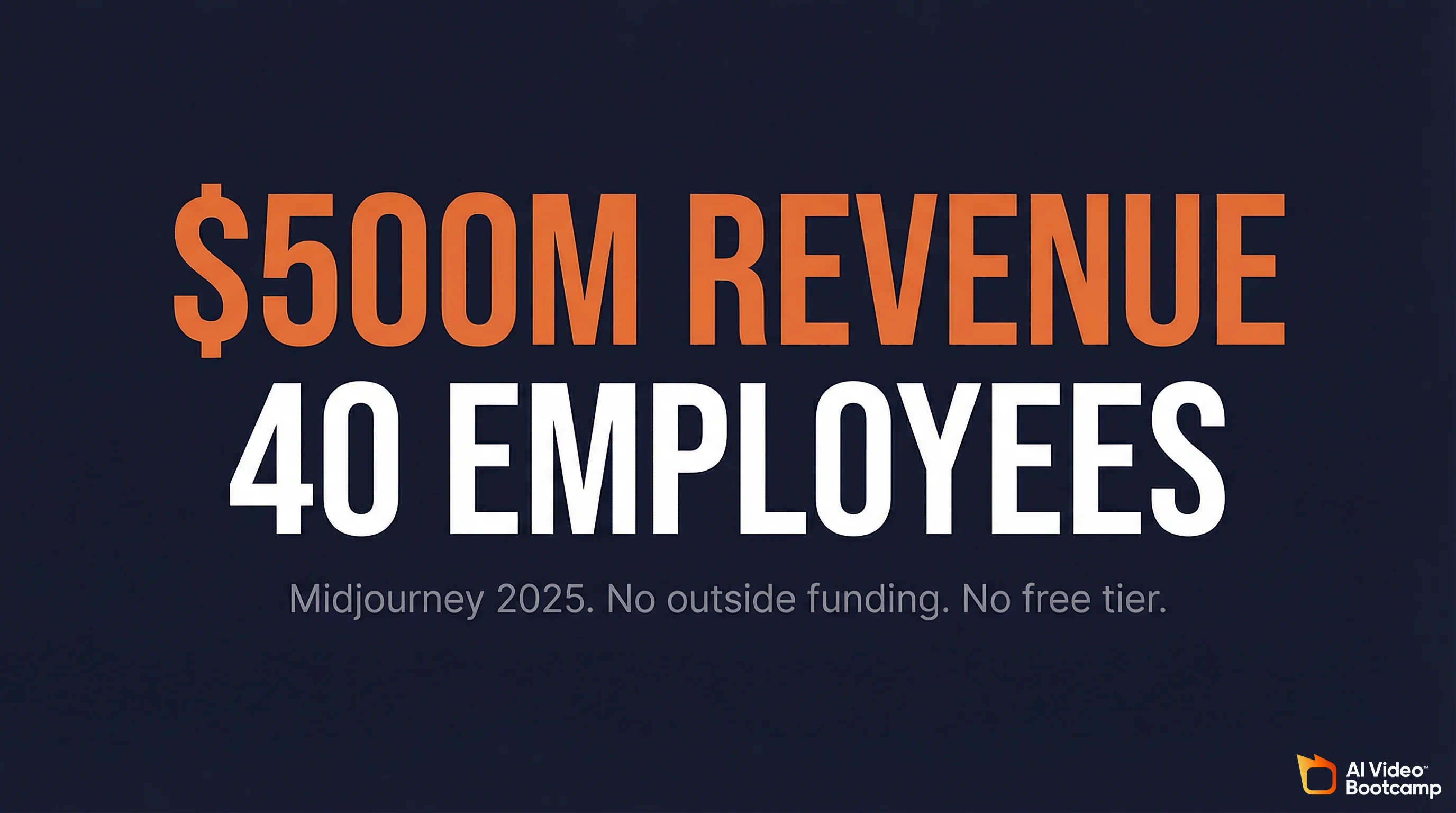
- Midjourney generated $500 million in revenue in 2025, a 66.7% increase from $300 million in 2024. What makes this remarkable is that Midjourney achieved this with no outside funding, no free tier, and a team of approximately 40 people - making it arguably the most capital-efficient AI company in the world. [6]
-
Midjourney had approximately 19.83 million users as of January 2026, with projections to reach 21 million by end of 2026. Daily active users range between 1.2 million and 2.5 million, indicating strong habitual usage. [3]
-
Midjourney holds a 26.8% global market share in AI image generation tools, followed by DALL·E at 24.4%, NightCafe at 23.2%, and Stable Diffusion at 15.1%. The top four players control over 89% of the market. [3]
-
Adobe Firefly reached 24 billion asset generations by May 2025, adding 6 billion new generations between October 2024 and April 2025 alone - exceeding its entire first-year output in just seven months. [7]
-
Adobe Firefly recorded $400 million in direct revenue between 2024 and 2025, with adoption by 75% of Fortune 500 companies. Unlike Midjourney, Firefly’s growth is driven by enterprise integration into Adobe’s existing Creative Cloud ecosystem. [8]
-
Adobe Firefly’s current generation rate hovers around 1.5 billion assets monthly, with 70% weekly active usage among registered users - one of the highest engagement rates in creative software. [8]
-
86% of creators now use creative AI in their daily workflows, and the average Firefly prompt length doubled in 2025. The lengthening prompts signal a shift from simple curiosity (“a cat in space”) to serious creative direction, suggesting AI image tools are becoming production tools rather than toys. [9]
AI Video Generation Market
AI video generation is the fastest-growing segment of generative media, evolving from experimental 4-second clips in 2023 to production-ready content in 2026. The economics of video production are being fundamentally rewritten.
-
The global AI video generator market was estimated at $788.5 million in 2025 and is expected to reach $946.4 million in 2026. While smaller than image generation in absolute terms, the growth rate signals rapid maturation. [10]
-
The AI video generator market is projected to reach $3.44 billion by 2033, growing at a CAGR of 20.3% from 2026 to 2033. This is considered a conservative estimate - some analysts expect the market to reach $18.6 billion by the end of 2026 when including adjacent tools and platforms. [10][11]
-
Asia-Pacific dominated the global AI video generator market with a 31.0% revenue share in 2025, while the Asia-Pacific AI video market is growing at a 42% CAGR - outpacing every other region. Chinese platforms like Kling AI are a major driver of this regional dominance. [10]
-
AI-generated creative is projected to account for 40% of all digital video advertisements by 2026, up from a negligible share just two years prior. This is perhaps the clearest signal of how quickly AI video has moved from experimental to essential. [12]
-
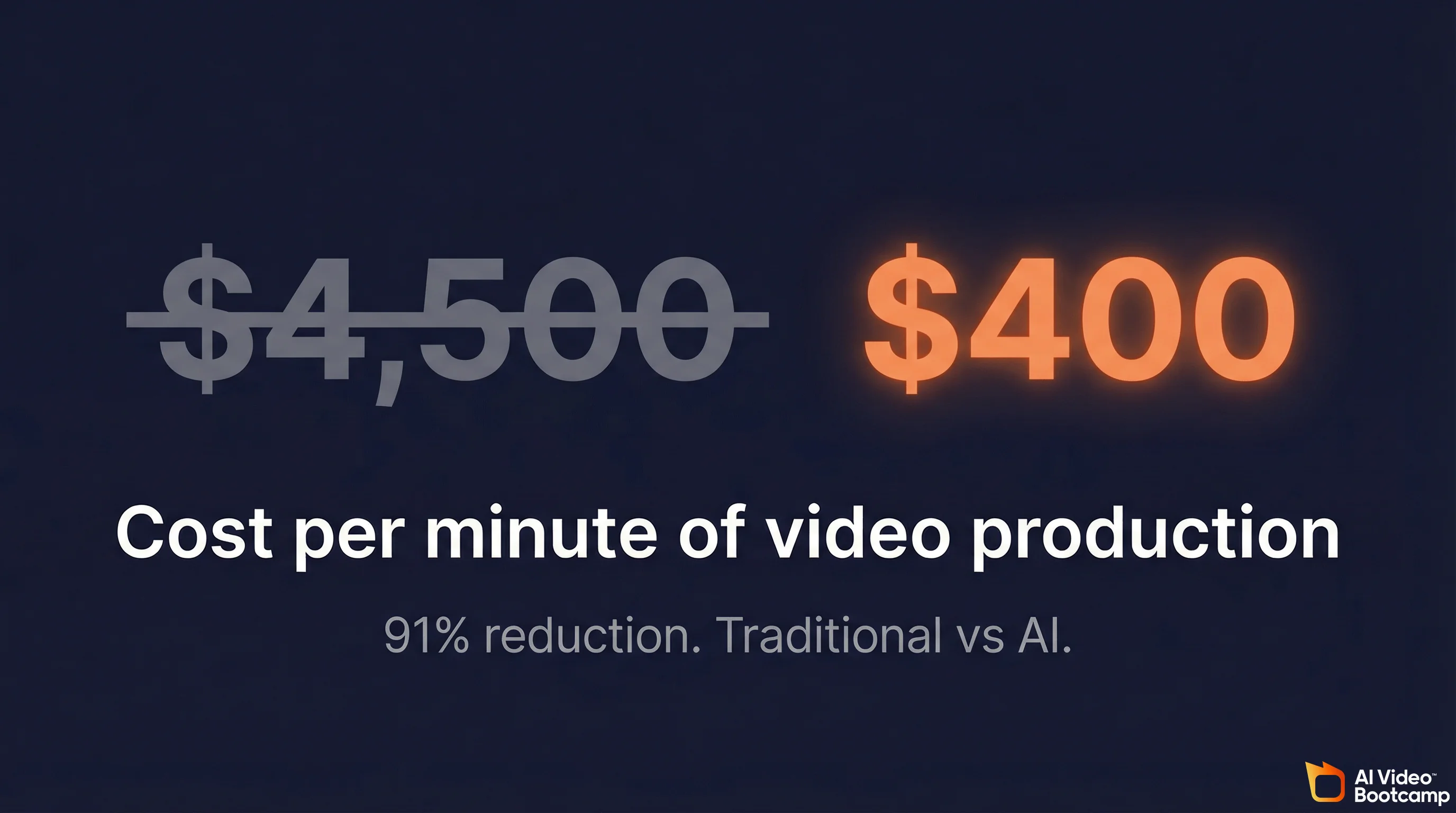
AI video production reduces average costs by 91% - from $4,500 per minute (traditional production) to roughly $400 per minute. This cost collapse is the primary driver of enterprise adoption, particularly in marketing and training content. [13]
- The global AI video generation market is projected to reach $18.6 billion by end of 2026, up from $5.1 billion in 2023 - a 3.6x increase in just three years. [11]
AI Video Generation - Platform Data
The competitive landscape in AI video shifted dramatically in early 2026, and the market is now maturing into clearly defined tiers - a sign that the technology is moving from hype into sustainable business.
-
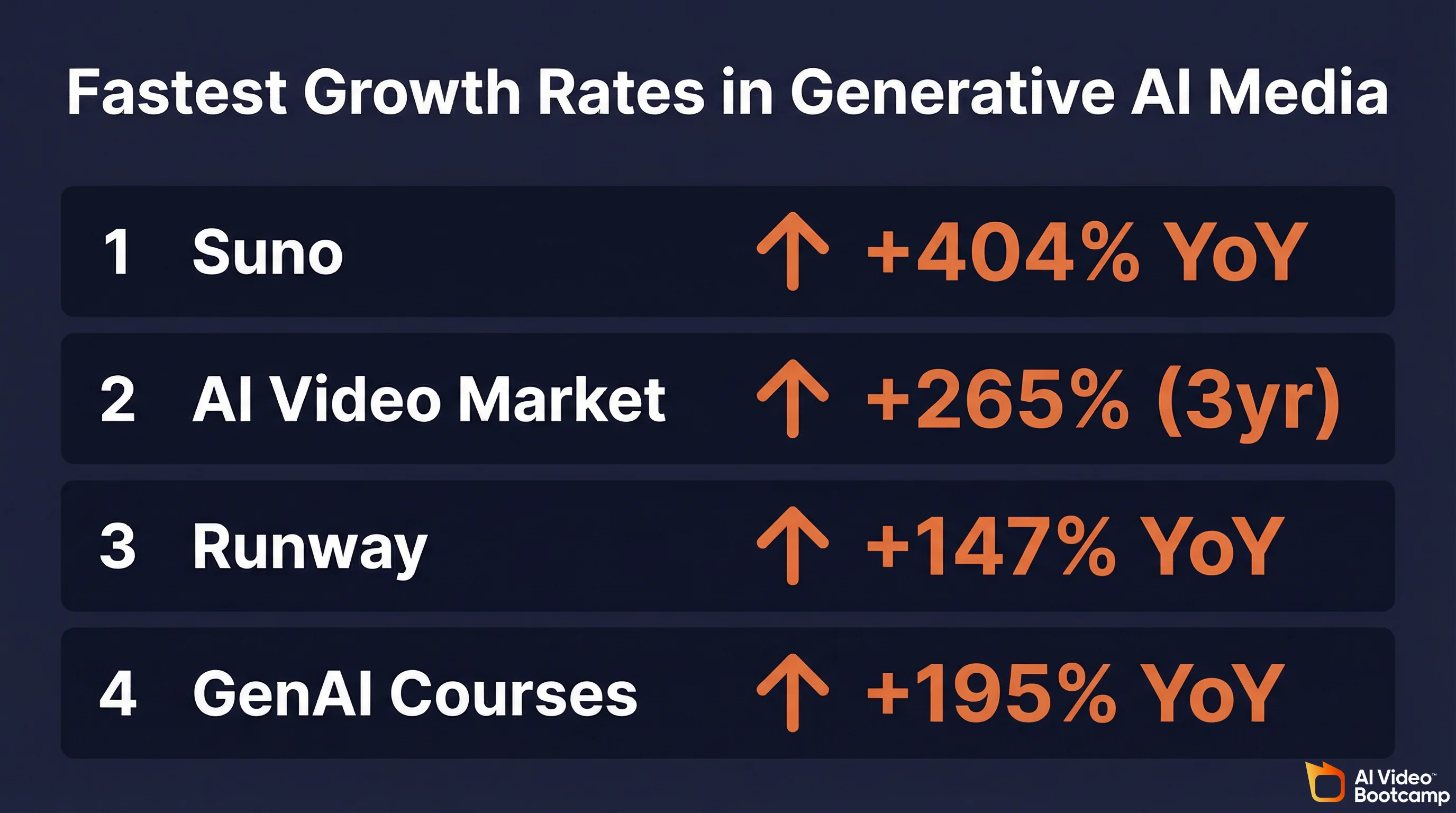
Runway ML hit $300 million in revenue in October 2025, up from $121.6 million in October 2024 - a 147% year-over-year increase. This makes Runway the clear commercial leader in AI video generation. [14]
-
Runway raised $315 million in Series E funding in February 2026 at a $5.3 billion valuation, bringing its total funding to $860 million across 7 rounds. The company is now positioning itself as a “world model” company rather than just a video tool. [15]
-
OpenAI discontinued Sora in March 2026, marking a pivotal shift in the AI video landscape. The exit of the largest player accelerated market consolidation around platforms with proven, sustainable business models - and validated that the real winners in AI video are companies laser-focused on the medium, not generalist AI labs treating it as a side project. [16]
-
Pika Labs has built a community of over 500,000 users who generate millions of videos weekly. Pika carved out a niche as the speed-first platform for short social content, and Meta held acquisition discussions with the company in July 2025. [17]
-
AI video platforms collectively generated over 8 million AI videos in 2025 across Runway, Pika, Google Veo, Kling AI, Luma Dream Machine, and others. [18]
-
The AI video market has organized into four distinct tiers: quality-first (Runway), cost-efficiency (Kling), ecosystem-integration (Google Veo 3), and open-source (Seedance), with Pika occupying a separate speed-first niche for social content. This tiering mirrors what happened in cloud computing a decade ago - and signals a maturing industry with room for specialized players. [18]
AI Music and Audio Generation Market
AI music generation is the youngest but fastest-accelerating segment of generative media. While image generation took 2-3 years to gain mainstream adoption, AI music tools reached meaningful scale in under 18 months.
-
The global AI music generator market is valued at $1.98 billion in 2025, with projections to reach $18.04 billion by 2035 at a CAGR of 28.5%. [19]
-
The broader generative AI in music market is projected to grow from $2.93 billion in 2025 to $22.67 billion by 2035, at a CAGR of 22.72%. The discrepancy with the $1.98 billion figure reflects different market definitions - the larger number includes AI-assisted production tools, not just generation. [20]
-
AI-generated music could account for 20% of global streaming revenue by 2028, according to CISAC (the International Confederation of Societies of Authors and Composers). If accurate, this would represent a massive structural shift in how music is produced, distributed, and monetized. [21]
-
Deezer receives 20,000 fully AI-generated tracks daily, representing 18% of all uploads to the platform. The volume of AI music being created is a clear indicator of how accessible music production has become - anyone with a text prompt can now produce a finished track. [21]
-
55% of electronic music producers and 53% of urban/rap artists now integrate AI into their workflows, making these genres the leading adopters of AI music tools. Artists are using AI for everything from beat generation to vocal layering to mastering. [21]
-
Cloud-based deployment accounts for 74% of the AI music generation market, with on-premise solutions making up the remaining 26%. The dominance of cloud reflects the compute-intensive nature of audio generation and the consumer-first business models of leading platforms. [19]
AI Music and Audio - Platform Data
Two companies dominate the AI music and voice generation landscape, with growth trajectories that rival the fastest-scaling SaaS companies in history.
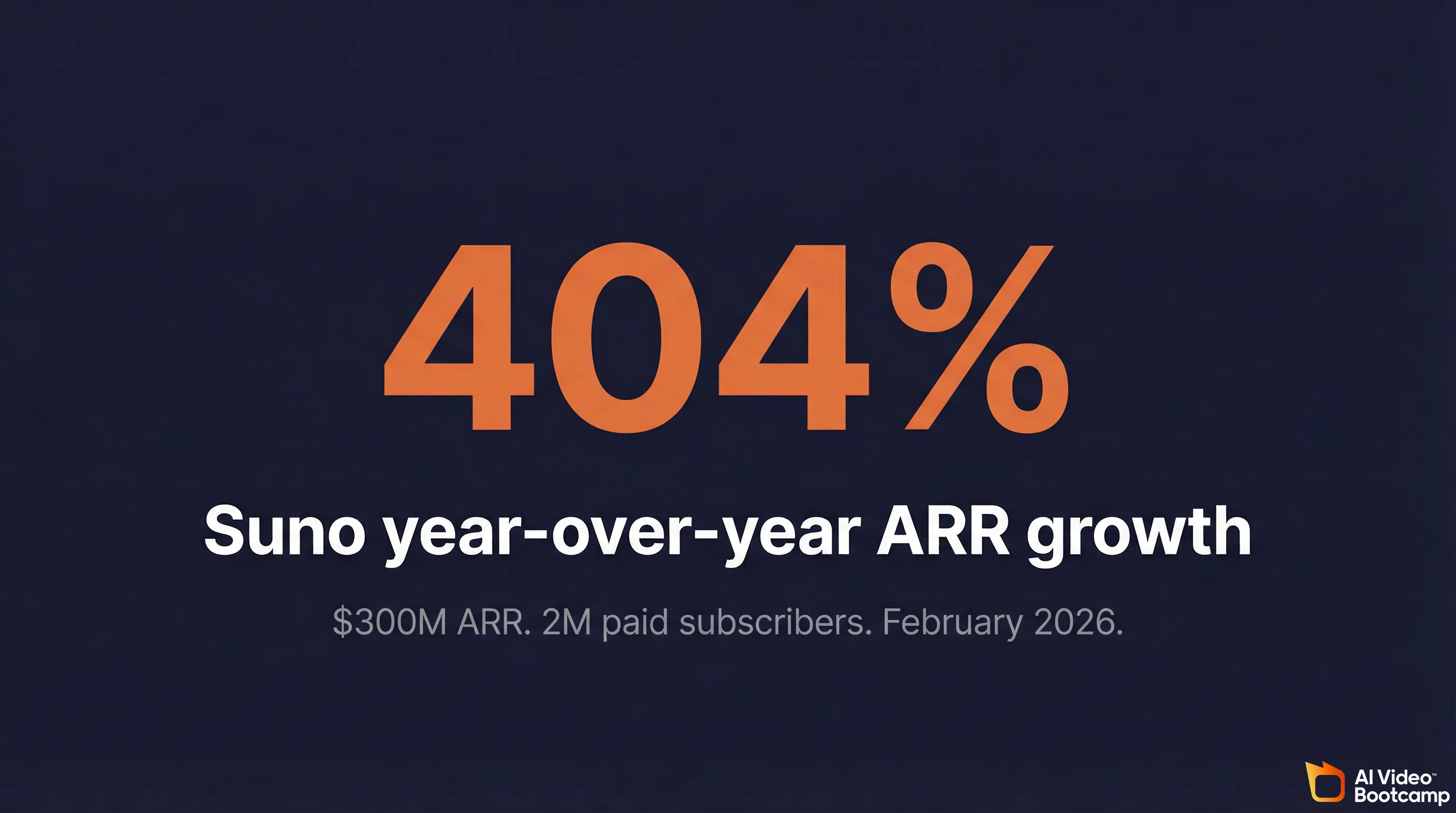
- Suno hit 2 million paid subscribers and $300 million in annual recurring revenue in February 2026, up 404% year-over-year. This makes Suno one of the fastest consumer SaaS companies to reach $300M ARR, outpacing the early growth curves of Spotify, Canva, and Notion. [22]
-
Suno doubled its paid user base from 1 million to 2 million in just a few months between late 2025 and early 2026. This acceleration suggests the platform is crossing from early adopters into mainstream usage. [22]
-
Suno raised $250 million at a $2.45 billion valuation in November 2025, bringing its total funding to $375 million from investors including Lightspeed Venture Partners, Nvidia’s NVentures, and Menlo Ventures. [23]
-
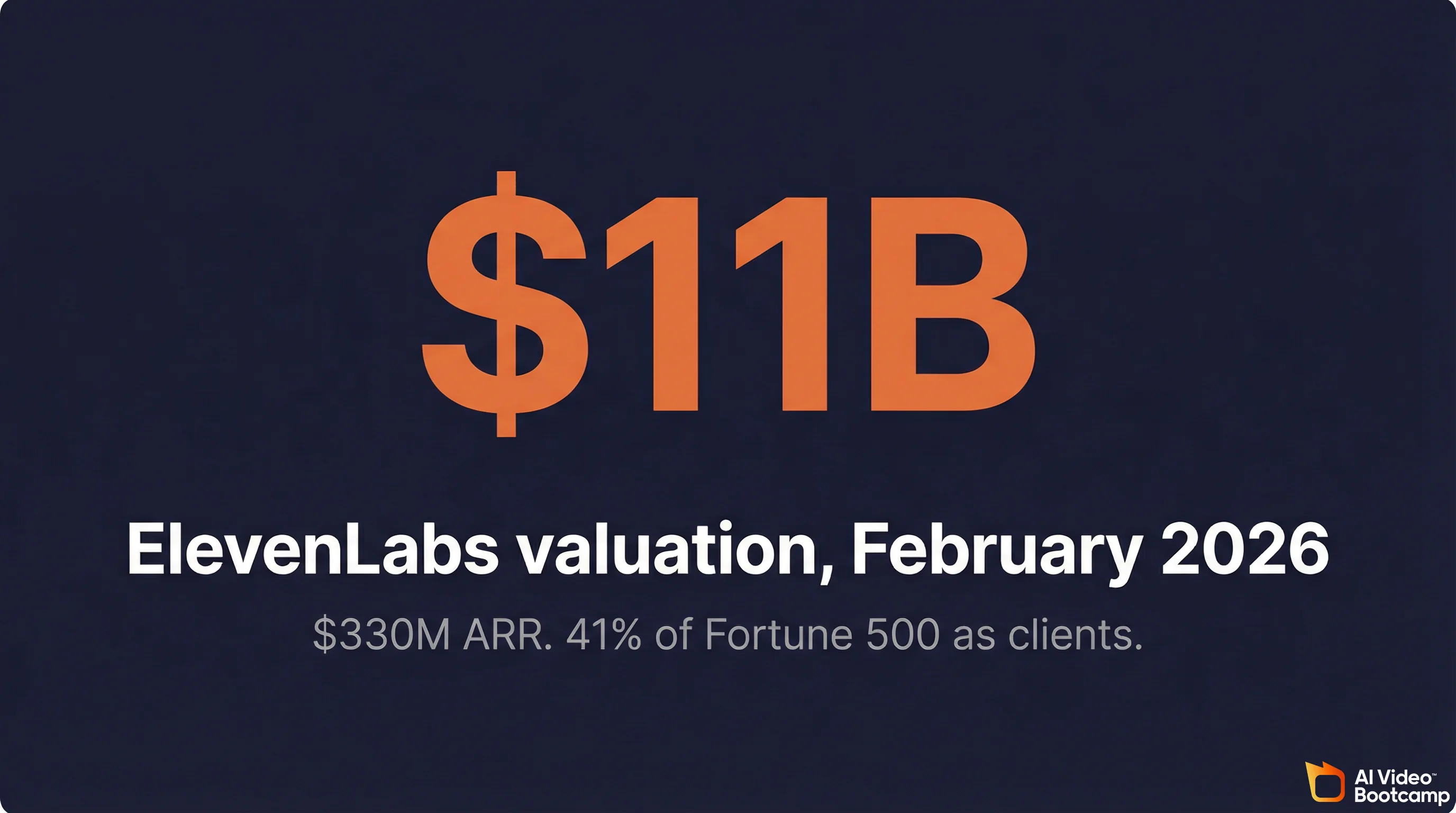
ElevenLabs raised $500 million at an $11 billion valuation in February 2026, as the AI voice platform eyes a potential IPO. The round was led by Sequoia Capital, and the valuation makes ElevenLabs one of the most valuable AI-native companies globally. [24]
-
ElevenLabs closed 2025 with over $330 million in ARR, driven by enterprise adoption - the platform is used by 41% of Fortune 500 companies. Clients include Deutsche Telekom, Revolut, and the Ukrainian government. [25]
-
Suno is now the only major text-to-song platform that allows users to own and commercially use their AI-generated music, after competitor Udio settled its Universal Music Group lawsuit by ending user ownership of generated content. This has made commercial rights a primary differentiator in the AI music market. [26]
Adoption, Usage, and Content Volume
Generative AI media tools are being adopted faster than almost any technology in history. The data below captures how deeply these tools have penetrated creative and business workflows.
-
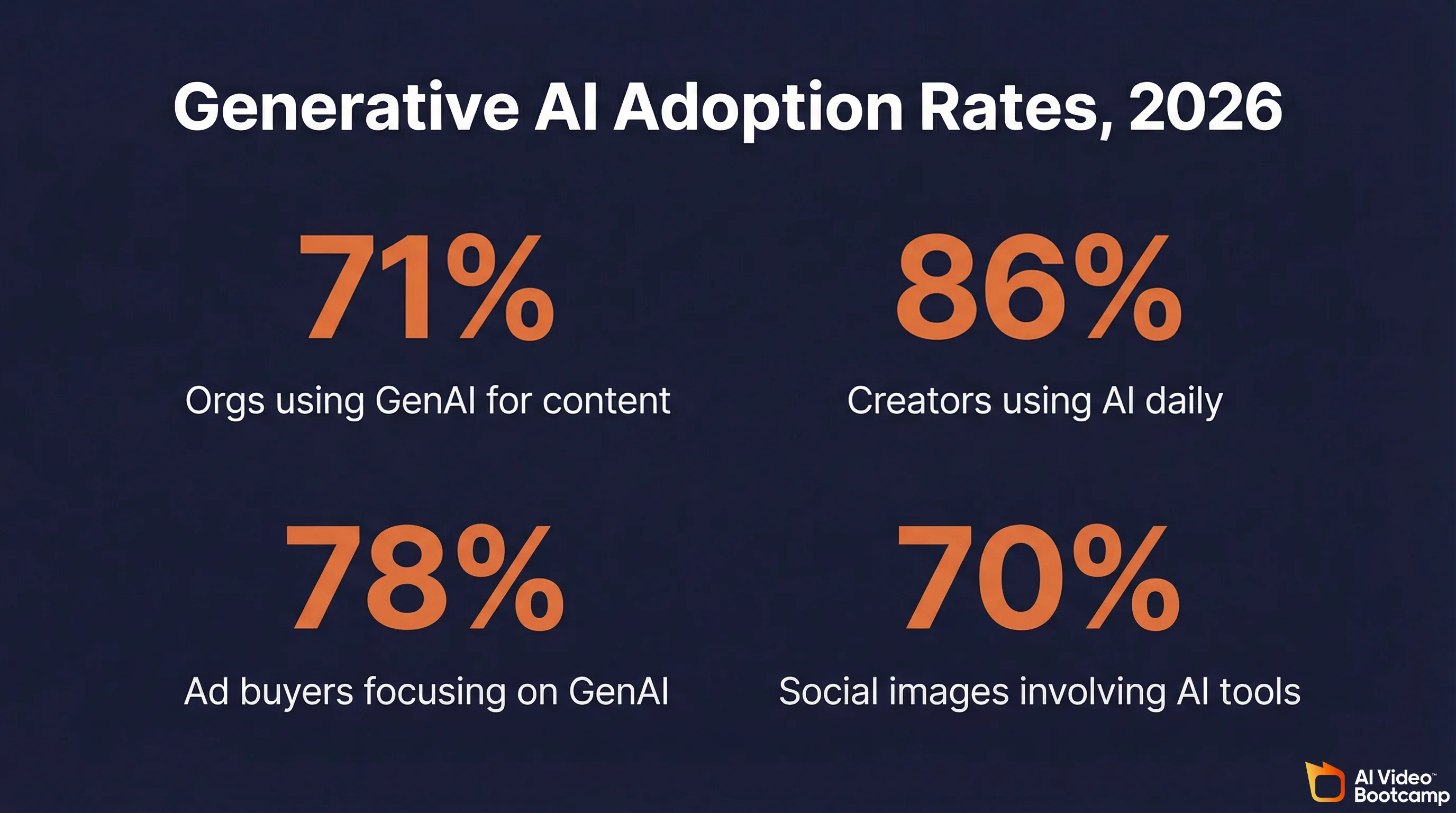
71% of organizations now use generative AI for content creation, with employees reporting 40% productivity boosts. Content creation is the single most common enterprise use case for generative AI. [27]
-
85.1% of AI users deploy it for content generation (blog, marketing, and creative), followed by email marketing (51%), text-based social media (49%), and video/audio content (47%). [28]
-
An estimated 70% of social media images now involve AI tools like Midjourney or DALL·E, reflecting how thoroughly AI has been integrated into visual content pipelines - from generation to enhancement to background removal. [29]
-
Over 69% of creative content workflows in media and entertainment now involve generative AI tools. This doesn’t mean 69% of content is fully AI-generated - most use cases involve AI as a co-creation tool in human-directed workflows. [30]
-
Marketers report saving an average of 3 hours per piece of content created with AI assistance. Across a content team producing 20 pieces per week, that translates to 60 hours saved - roughly 1.5 full-time employees. [28]
-
68% of consumers view generative AI favorably (up from 62% in 2024), while 75% of marketers hold a positive view (up from 68%). The perception gap between consumers and marketers is narrowing. [31]
-
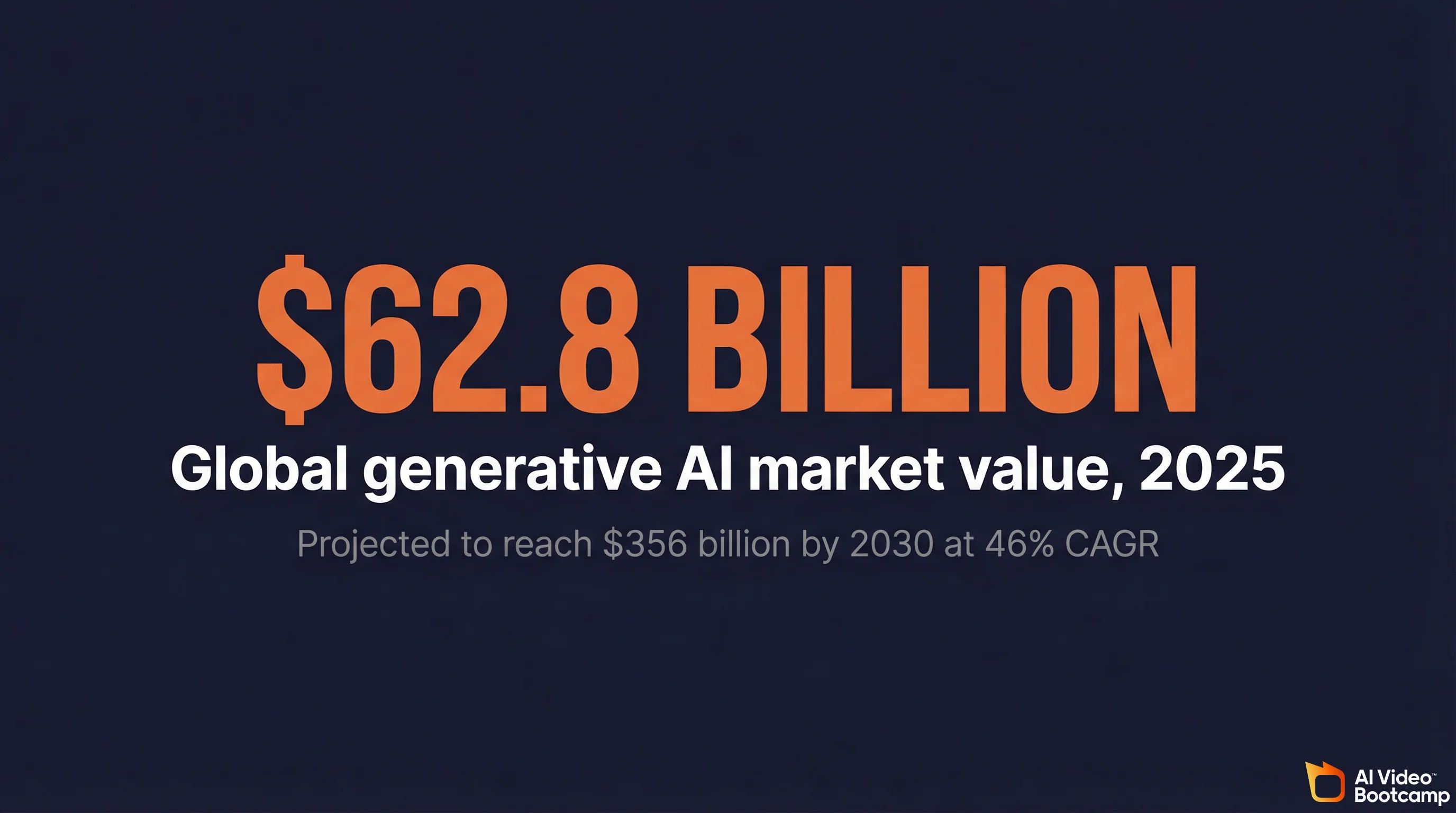
The global generative AI market is valued at $62.8 billion in 2025, forecasted to hit $356 billion by 2030 at a 46% CAGR. Media generation (image, video, audio) represents the fastest-growing subsegment within this total. [32]
-
Worldwide GenAI spending is forecast to reach $644 billion in 2025, according to Gartner. This figure includes infrastructure, platform services, and application software - the full stack of generative AI investment. [33]
AI in Advertising and Marketing
Advertising is one of the industries most aggressively adopting generative media. The cost and speed advantages are too significant for marketers to ignore, and adoption metrics reflect this urgency.
-
AI video ad spend is projected to hit $9.1 billion globally in 2026 - roughly 12% of all digital video advertising. Within two years, AI-generated video has gone from zero ad spend to a $9 billion category. [13]
-
78% of ad buyers plan to strengthen their focus on generative AI in media campaigns in 2026, compared to 62% in 2025. The 16-percentage-point jump represents the fastest shift in creative tooling adoption in advertising history. [12]
-
86% of ad buyers are using or planning to use generative AI to build video ad creative in 2026, making it a cornerstone of the production pipeline rather than an experimental add-on. [34]
-
Cost efficiency is now the top benefit of AI in advertising, cited by 64% of respondents in 2026. This represents a notable shift - in 2024, cost efficiency ranked fifth behind speed, personalization, scalability, and creative variety. [12]
-
Getty Images reported record revenue of $981.3 million in 2025 (a 4.5% increase YoY) and has struck AI licensing partnerships with Perplexity, Picsart, Runway, and Nvidia. Getty’s strategy of licensing training data to AI companies - rather than competing with them - is emerging as a blueprint for legacy media companies navigating the AI transition. [35]
-
79% of marketers plan to increase spend on generative AI creator content in 2026, up from 70% in 2023. Meanwhile, 77% said they plan to divert budgets away from traditional creator marketing to AI-generated creator content. [36]
AI Skills, Jobs, and the Creator Economy
The rise of generative media is creating one of the most significant workforce transformations in decades. The demand for AI creative skills far outpaces supply, and the professionals who build these skills early are commanding significant premiums.
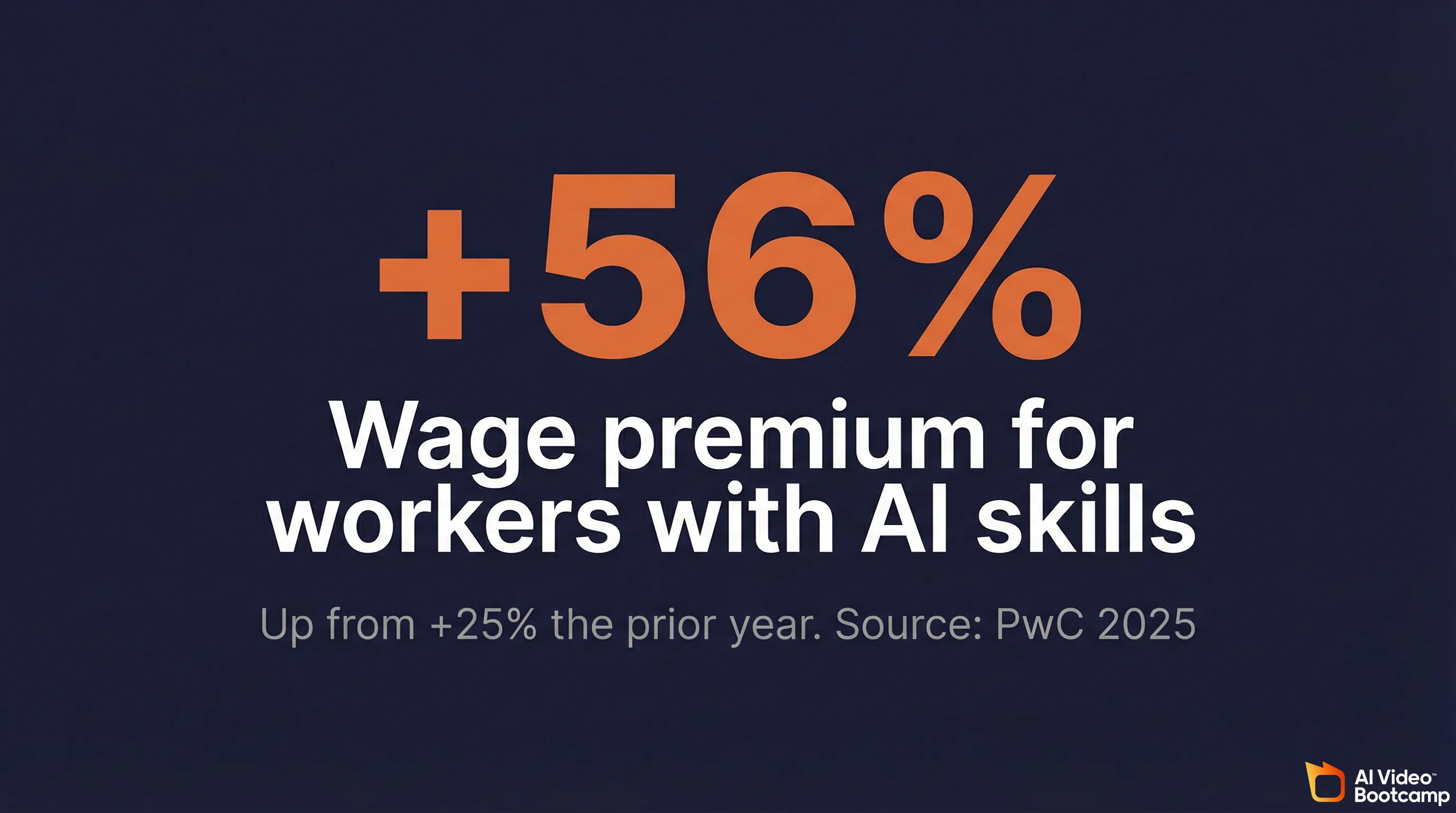
- Workers with AI skills earn a 56% wage premium over peers without AI skills, according to PwC’s 2025 Global AI Jobs Barometer. This is up from a 25% premium the prior year - the premium more than doubled in a single year. [37]
-
The number of workers in roles requiring AI fluency has grown sevenfold in two years - from approximately 1 million in 2023 to around 7 million in 2025. Generative media skills (image, video, audio production with AI) are among the fastest-growing subcategories. [37]
-
Generative AI course enrollments on Coursera surged 195% year-over-year in 2025, making GenAI the fastest-growing skill category on the platform. Coursera’s 700 GenAI courses now average 12 enrollments per minute - up from just 1 per minute in 2023. [38]
-
77% of employers plan to reskill or upskill their workforce to work effectively with AI tools between 2025 and 2030, according to the World Economic Forum. Workers can expect 39% of their current skill sets to become outdated or transformed in the same period. [39]
-
Productivity growth has nearly quadrupled in industries most exposed to AI, rising from 7% (2018-2022) to 27% (2018-2024) since GenAI’s proliferation. This is the strongest evidence yet that AI skills translate directly into economic output. [37]
-
The AI in creator economy market grew from $3.31 billion in 2024 to $4.35 billion in 2025 and is projected to reach $12.85 billion by 2029 at a CAGR of 31.1%. AI-powered creators are the fastest-growing segment within the broader $117 billion creator economy. [40]
-
59% of creators use generative AI tools to streamline content creation, according to Adobe’s survey of over 16,000 creators across eight countries. The highest adoption rates are among creators aged 25-34, who represent 38% of all AI creative tool users. [36]
-
The global AI talent shortage has reached a demand-to-supply ratio of 3.2:1 across key roles in 2026. The most severe shortages are in LLM development, MLOps, and AI creative production - meaning professionals who master these skills now are entering a market with far more demand than supply. [41]
-
In 2025, 22 million new learners joined Coursera - roughly 82,000 people every day - with AI and GenAI courses driving the majority of new enrollments. India leads globally with over 1.3 million GenAI course enrollments. [38]
Future Predictions and Forecasts
Where industry analysts and research firms expect generative media to go next. These projections come primarily from Gartner, PwC, and Precedence Research.
- 40% of generative AI solutions will be multimodal (text, image, audio, and video) by 2027, up from 1% in 2023. This means the current silos between image generators, video generators, and audio tools will collapse into unified platforms - and creators who understand all three modalities will have a significant advantage. [42]
-
By 2027, more than 50% of GenAI models used by enterprises will be specific to an industry or business function, up from approximately 1% in 2023. For media generation, this implies specialized models for advertising, film, gaming, and music production - and growing demand for people who can operate them. [43]
-
By 2028, 33% of enterprise software applications will incorporate agentic AI capabilities, up from less than 1% in 2024. In the media context, this means AI tools that don’t just generate on command but autonomously plan, iterate, and deliver creative work. [44]
-
By 2030, 80% of enterprise software will be multimodal, up from less than 5% in 2024. Image, audio, and video generation will be embedded into most business tools - from email platforms to CRM systems to project management software. [45]
-
AI adoption is projected to have a cumulative global economic impact of $19.9 trillion by 2030, contributing 3.5% to global GDP. Media and creative industries are among the sectors with the highest projected impact per worker. [46]
-
The generative AI market is expected to reach $356 billion by 2030, growing at a 46% CAGR from its 2025 valuation of $62.8 billion. [32]
-
By 2028, 30% of S&P 500 companies will use GenAI labeling (such as “xxGPT”) in their branding to attract revenue and signal AI capability. The race to signal AI adoption is becoming a branding strategy in itself. [44]
Key Takeaways
The generative AI media landscape in 2026 is defined by three dynamics:
Massive scale, maturing economics. The volume of AI-generated content is staggering - 34 million images per day, 15 billion+ total images since 2022, 8 million AI videos in 2025. The market is maturing fast: Runway hit $300M revenue and a $5.3B valuation, Midjourney generated $500M with a 40-person team, and the AI video market is consolidating into distinct, sustainable tiers. The winners are platforms with clear value propositions and sustainable unit economics.
Audio is the breakout category. While image generation is the largest market, audio and music are growing fastest in relative terms. Suno’s 404% ARR growth to $300M and ElevenLabs’ leap to an $11B valuation represent the most dramatic financial acceleration in the entire generative AI space. The fact that Deezer now receives 18% of all uploads as fully AI-generated tracks signals a structural shift in how music is produced and distributed.
The skills gap is the defining opportunity. AI-skilled workers earn 56% more than their peers, demand outpaces supply 3.2-to-1, and GenAI course enrollments are surging 195% year-over-year. The professionals and creators who master generative media tools now - image, video, and audio - are positioning themselves at the center of a $356 billion market that’s short on talent and long on demand.
Sources
[1] The Business Research Company, “Artificial Intelligence (AI) Image Generator Global Market Report 2026”
[2] Market.us, “AI-Powered Image Generation Tool Market Report”
[3] DemandSage, “Midjourney Statistics 2026”
[4] Fortune Business Insights, “AI Image Generator Market Report 2034”
[5] Everypixel Journal, “AI Image Statistics”
[6] Sacra, “Midjourney Revenue, Funding & News”
[7] Adobe Newsroom, “Adobe Revolutionizes AI-Assisted Creativity with Firefly” (April 2025)
[8] Quantum Run, “Adobe Firefly Statistics and User Trends 2026”
[9] Adobe Blog, “Create with Unlimited Generations in Adobe Firefly” (February 2026)
[10] Grand View Research, “AI Video Generator Market Size & Share Report 2033”
[11] Fortune Business Insights, “AI Video Generator Market Report 2034”
[12] IAB, “The AI Ad Gap Widens”
[13] Vivideo, “75 AI Video Statistics Every Marketer Needs to Know in 2026”
[14] Getlatka, “Runway ML Revenue and Customers 2025”
[15] TechCrunch, “AI Video Startup Runway Raises $315M at $5.3B Valuation” (February 2026)
[16] Nerd Level Tech, “OpenAI Sora Shutdown: AI’s Most Expensive Failure”
[17] Sacra, “Pika Valuation, Funding & News”
[18] Digital Applied, “After Sora: Best AI Video Generators 2026”
[19] Business Research Insights, “AI Music Generator Market Share & Trends 2026-2035”
[20] Market Research Future, “Generative AI in Music Market Growth Report 2035”
[21] ArtSmart, “AI in Music Industry Statistics 2025”
[22] TechCrunch, “AI Music Generator Suno Hits 2M Paid Subscribers and $300M in ARR” (February 2026)
[23] Inc., “Despite Being Sued by Nearly Every Record Label, This AI Startup Just Hit a $2.45 Billion Valuation”
[24] CNBC, “Nvidia-Backed AI Voice Startup ElevenLabs Hits $11 Billion Valuation” (February 2026)
[25] ElevenLabs Blog, “ElevenLabs Raises $500M Series D at $11B Valuation”
[26] Billboard, “The 10 Biggest AI Music Stories of 2025”
[27] Sequencr, “Key Generative AI Statistics and Trends for 2025”
[28] AutoFaceless, “AI Content Creation Statistics 2026”
[29] Amra and Elma, “Top Generative AI Image Use in Ads Statistics 2025”
[30] eMerge Americas, “What Is Generative Media? 2025 Trends in AI Video, Art, and Music Creation”
[31] eMarketer, “FAQ on Generative AI: How Consumer Adoption Is Steering Marketing in 2026”
[32] Precedence Research, “Generative AI Market Size, Share and Trends 2026 to 2035”
[33] Gartner, “Gartner Forecasts Worldwide GenAI Spending to Reach $644 Billion in 2025” (March 2025)
[34] IAB, “2025 Digital Video Ad Spend & Strategy Full Report”
[35] Getty Images Newsroom, “Getty Images and Perplexity Strike Multi-Year Image Partnership” (October 2025)
[36] Adobe Newsroom, “Inaugural Adobe Creators’ Toolkit Report” (October 2025)
[37] PwC, “2025 Global AI Jobs Barometer”
[38] Coursera, “Job Skills Report 2026” and “2026’s Fastest-Growing Skills and Top Learning Trends From 2025”
[39] World Economic Forum, “AI Skills Demand in the U.S. Job Market (2026)”
[40] GlobeNewsWire, “Artificial Intelligence in Creator Economy Global Market Report 2025”
[41] Second Talent, “Top 50+ Global AI Talent Shortage Statistics 2026”
[42] Gartner, “Gartner Predicts 40% of Generative AI Solutions Will Be Multimodal By 2027” (September 2024)
[43] Gartner, “3 Bold and Actionable Predictions for the Future of GenAI”
[44] Gartner, “Gartner Unveils Top Predictions for IT Organizations and Users in 2026 and Beyond” (October 2025)
[45] Gartner, “Strategic Predictions for 2026: How AI’s Underestimated Influence Is Reshaping Business”
[46] PwC, “AI Adoption Global Economic Impact Study”
© 2026 AI Video Bootcamp. All statistics sourced from publicly available reports, company announcements, and industry research. If you cite this article, please link back to the original.